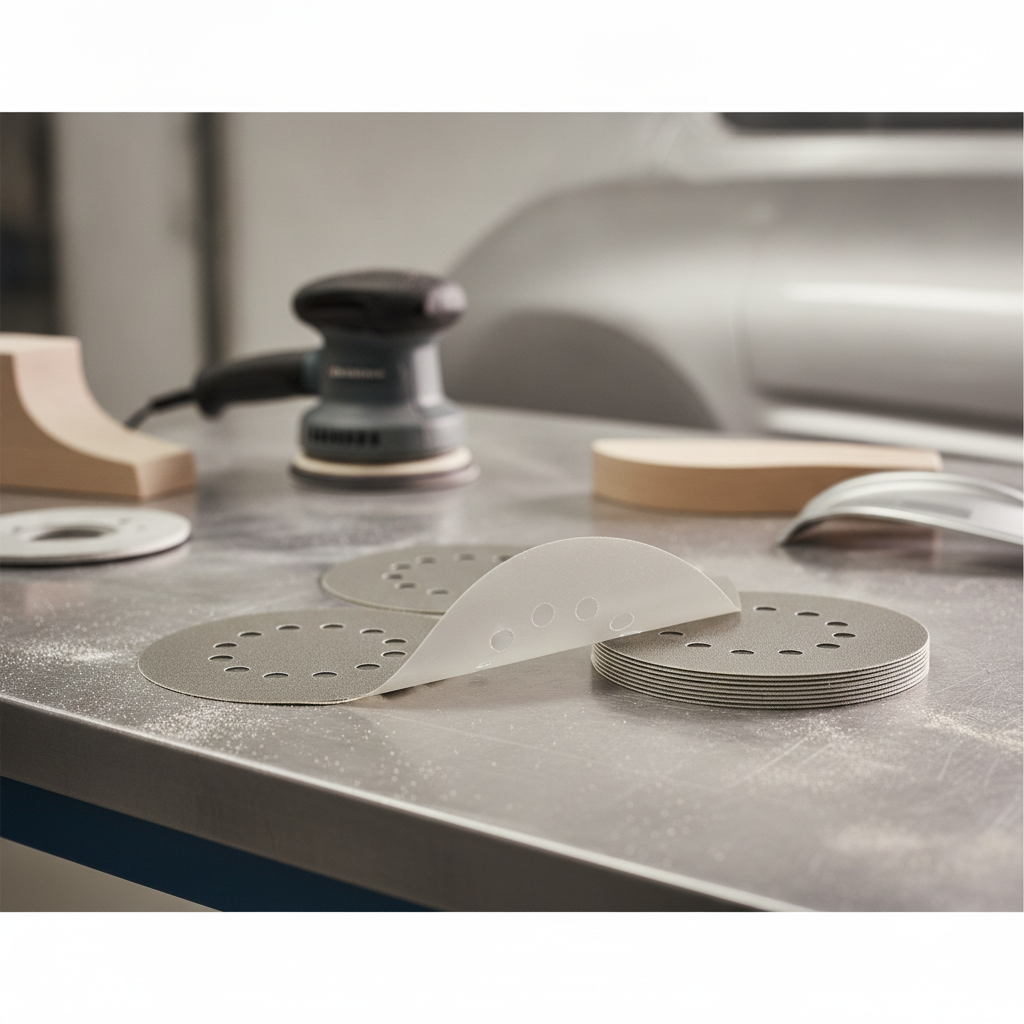
What Is a Film Sanding Disc? Expert Guide to Consistency
A buyer from an auto refinishing shop in Guangzhou told me something I hear often: “Paper discs are cheaper, so why does the finish still look unpredictable?” That question usually leads straight to film sanding discs, especially when P400 to P800 consistency starts affecting rework, polishing time, and coating quality.
A film sanding disc is defined by its polyester film1m backing](https://www.seriousgrit.com/blogs/sandpaper-post/what-are-film-discs-and-why-should-i-care?srsltid=AfmBOopx4LiP5dhPdI_wU83eQ5MV8UtWrUtVEwBb6Y4HIFR40u7IxAFQ)[^1], commonly PET or Mylar, rather than paper or cloth. This backing is manufactured with highly uniform thickness, such as 3 mil or 5 mil, which creates a flatter base for abrasive grains and a more consistent scratch pattern2, particularly at P240 and finer. Compared with paper-backed discs, film discs generally offer better tear resistance, moisture stability, and more predictable
What Defines a Film Sanding Disc?
A film sanding disc is defined by its polyester film backing, typically PET or Mylar, rather than paper or cloth. Common backing thicknesses include 3 mil (about 76 microns) and 5 mil (about 127 microns). This flat, dimensionally stable base supports more uniform abrasive grain placement, producing a more consistent scratch pattern, predictable cut rate, and fewer random deep scratches in fine finishing applications.
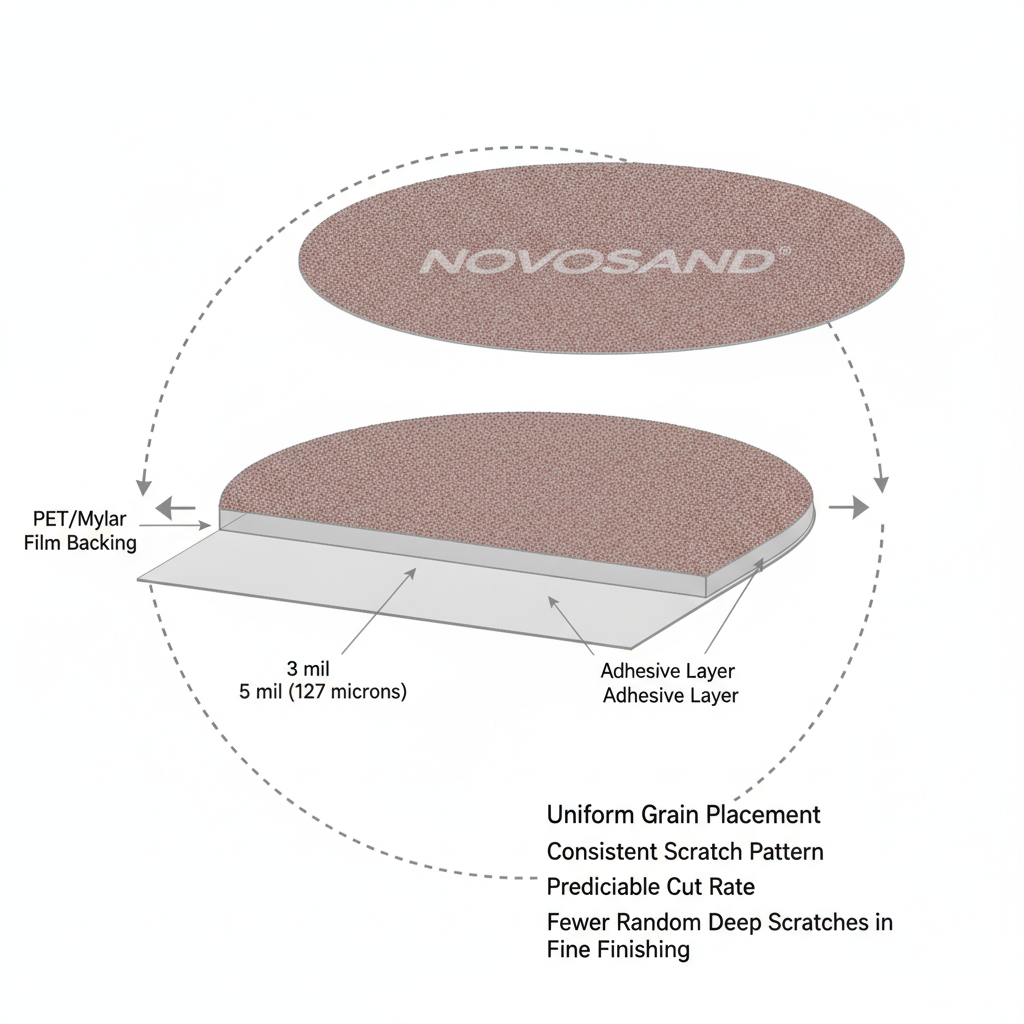
A film sanding disc is defined first by its backing—not the grain. Instead of paper or cloth, it uses a polyester film, usually PET or Mylar, with a very controlled thickness such as 3 mil, about 76 microns, or 5 mil, about 127 microns.
That difference sounds simple, but it changes the whole sanding behavior. Because the film stays flatter and more dimensionally stable, abrasive grains like aluminum oxide, silicon carbide3, or ceramic sit at a more even height across the disc surface. The result is a more uniform scratch pattern, steadier cut rate, and fewer random deep scratches, especially from P240 upward.
I’ve seen this matter most in fine finishing lines. A furniture component supplier I worked with used 6-inch hook-and-loop film discs in P320 and P400 for sealer sanding on lacquered panels. After switching from a paper-backed disc to a 3 mil film-backed version, they cut rework by around 20% because the finish became more predictable from panel to panel.
For process engineers, this is where film backing earns its cost premium. Surface roughness, or Ra, stays more stable lot to lot, and operators spend less time chasing isolated scratch defects. To be honest, this is also where the spec sheet gap appears—buyers compare grit only, but ignore film thickness tolerance and grain grading consistency.
I always suggest checking whether the supplier follows FEPA grading or micron grading, especially for fine grits. If the backing thickness varies too much, the consistency advantage of film starts to disappear.
"AFalse
"Film
A sanding disc is only classified as a film disc if it uses silicon carbide grain on a 5 mil polyester backing, since aluminum oxide and ceramic grains require paper or cloth to bond correctlyFalse
Film sanding discs are defined by the backing material being polyester film, not by a required grain type or a single backing thickness. Film-backed discs are commonly made with aluminum oxide, silicon carbide, ceramic, and other abrasive types depending on the application. They are also produced in multiple film thicknesses, including but not limited to 3 mil and 5 mil, so neither the grain choice nor the exact thickness determines whether the disc is considered a film sanding disc.
Are Film Discs More Durable Than Paper?
Film-backed sanding discs are generally more durable than paper-backed discs, especially under edge loading, on contoured parts, and in humid or wet environments. Polyester film resists tearing, edge fraying, chunking, and moisture-related weakening, which can improve service life and scratch consistency. In automated sanding, the larger benefit is often more predictable wear, reducing unplanned disc changes, process interruptions, and defect risk after validation trials.
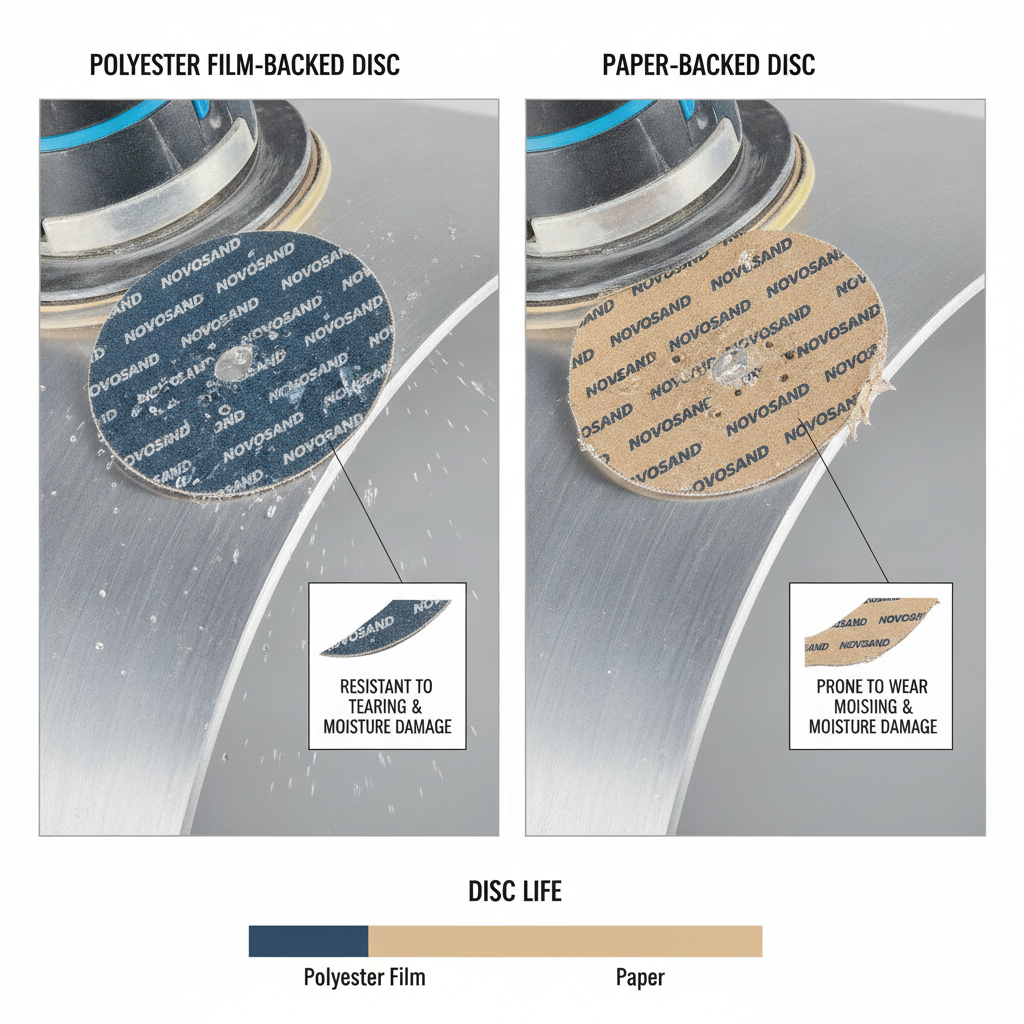
Durability usually shows up first at the disc edge, not in the center. When operators sand contours, sharp corners, or primer edges, paper-backed discs often fray, crack, or curl earlier than polyester film.
In automotive refinishing and composite finishing, that difference is easy to see. A 5-inch P320 film disc with aluminum oxide or ceramic grain often lasts around 25-40% longer than a comparable C-weight paper disc during dry finish sanding. I’ve seen this with a bumper repair line using hook & loop random orbital sanders—paper discs failed at the edge after 20-25 panels, while film discs stayed usable for roughly 30-35 panels. The gain was not only disc life. Scratch consistency stayed tighter too.
Moisture makes the gap wider. Paper backing can soften in humid workshops or during wet sanding5, especially from P600 upward, and then the disc may curl or lose flat contact. Film backing resists that much better. To be honest, this matters a lot in clear coat denibbing, plastic parts, and primer sanding, where one torn edge can leave a deep stray scratch and create rework.
For automated sanding cells, predictable wear is often more valuable than maximum life. I always suggest tracking failure modes during trials: edge tear, loading, chunking, and humidity curl. One furniture components customer compared 150 mm P240 discs on profiled MDF parts and reduced unplanned disc changes by around 30% after switching to film.
So yes, film discs are generally more durable than paper. But I suggest validating them on your actual grit range, pressure, speed, and dust extraction before making a full change.
How Does Film Backing Improve Consistency?
Film backing improves finish consistency by providing a thin, flat, dimensionally stable base that supports more uniform abrasive grain distribution and grain height. This produces a more even scratch pattern, more predictable Ra and Rz values, and fewer random deep scratches than many paper-backed discs, especially in medium-to-fine grit sanding. In validated production settings, the result can include less rework, tighter process control, and more stable coating or polishing outcomes.
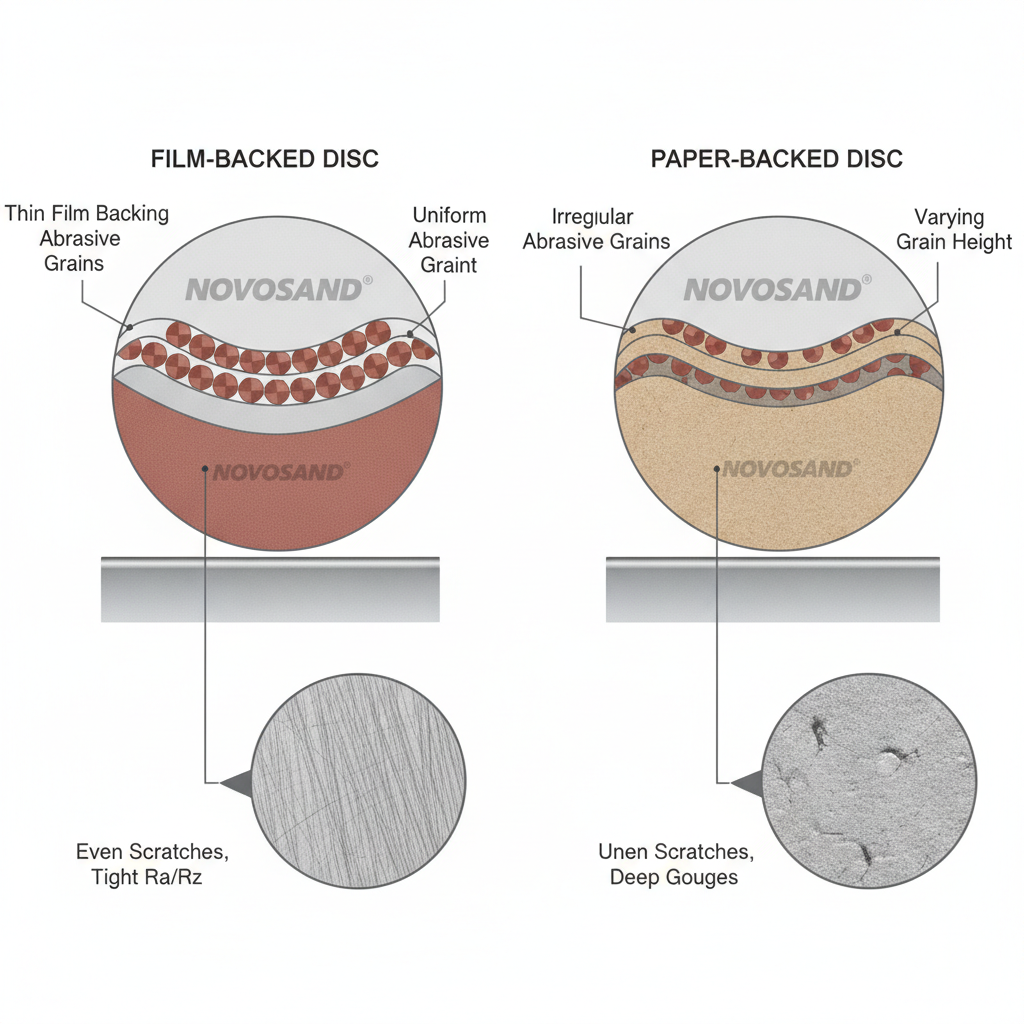
Finish consistency usually breaks down at the scratch pattern, not at the nominal grit rating. Film backing helps because it stays flatter under load, so the abrasive grains sit more evenly and cut at a more consistent height.
In medium-to-fine sanding, that matters a lot. A P400 or P600 film disc with aluminum oxide or ceramic-alumina grain usually leaves fewer random deep scratches than many paper-backed discs on the same orbit sander. I’ve seen this clearly in automotive primer sanding, especially with 5-inch and 6-inch hook & loop discs on softer interface pads. The Ra value6—that is surface roughness—often stays in a tighter band from panel to panel.
One auto refinishing customer I supported used P500 paper discs for primer prep, then compared them with P500 film discs over a two-week A/B trial. Their defect checks showed roughly 20-30% fewer visible sanding marks after basecoat, and rework dropped by about 15%. Just as important, operators reported more predictable sanding behavior near edges and body lines. That’s where consistency roulette often starts.
I’ve also seen similar results in high-gloss furniture production. On MDF sealer sanding, a film-backed disc in P320-P600 gave a more even scratch pattern before topcoat, which helped reduce nib sanding and polishing time later. The backing itself does not make the grit “finer.” It makes the finish more uniform.
That is the key point. I always suggest validating with controlled trials—same machine speed, pad hardness, dust extraction, and pressure—then compare roughness, defect rate, and downstream coating results before changing your grit sequence.
In P400-P600 finishing, a polyester film-backed disc often produces a tighter scratch-depth distribution than a paper-backed disc of the same nominal grit because the stiffer backing deflects less under pad pressure, keeping more abrasive grains cutting at a similar protrusion height.True
Finish uniformity is governed more by scratch pattern consistency than by the grit number alone. Film backing is dimensionally more stable and stays flatter during sanding, especially on orbit sanders, so fewer grains dig unusually deep while others barely cut. That reduces random deep scratches that can telegraph through primer or topcoat, which is why film discs are widely favored in fine automotive primer sanding.
Film backing improves consistency mainly because it makes the abrasive grains sharper than the same aluminum oxide or ceramic-alumina grain on paper, typically increasing grain hardness by about 15-20%.False
Backing type does not change the intrinsic hardness or sharpness of the abrasive mineral. Grain properties are determined by the abrasive material and its manufacturing process, not by whether it is bonded to film or paper. Film improves consistency by providing a flatter, more uniform platform under load, which affects how evenly the grains contact the surface—not by making the grains themselves harder.
When are film sanding discs best?
Film sanding discs are best for applications where finish quality, scratch consistency, and process stability matter more than the lowest consumable cost. They excel in automotive refinishing, primer and paint preparation, clear coat defect removal, plastics, composites, and high-value woodworking, especially on contoured parts, in wet or humid conditions, and on automated lines requiring predictable wear and fewer random deep scratches.
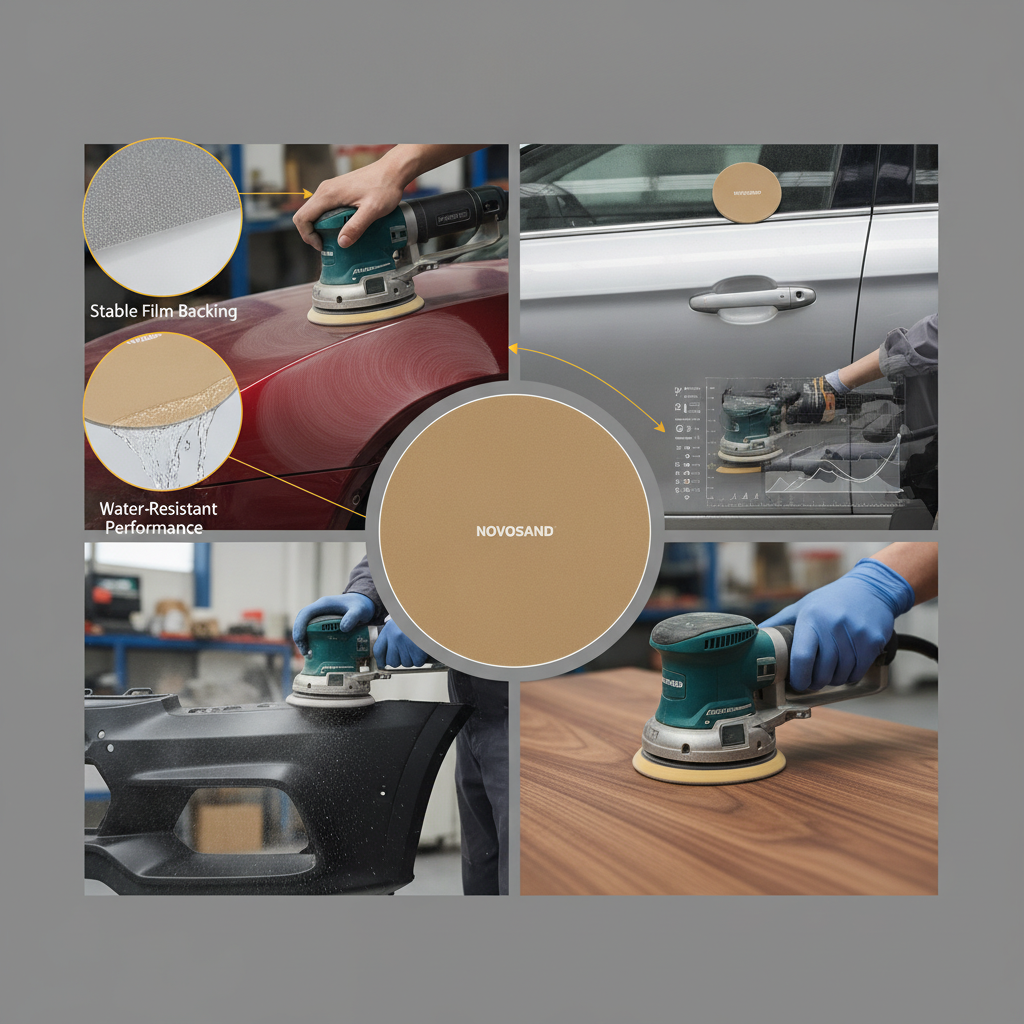
Film sanding discs make the most sense when one bad scratch costs more than the disc itself. That usually happens in primer sanding, clear coat correction, composite finishing, and veneer work where surface uniformity drives the next process.
In automotive refinishing, I usually see film discs used from P400 to P800 for primer prep, then P1000 to P3000 for denibbing and polishing preparation. The film backing stays flat, so the scratch pattern remains tighter and more even than many paper discs. That matters on fenders, bumper covers, and curved panels. One random deep scratch can send the part back for rework.
I saw this clearly with an auto body customer in Southeast Asia using 150 mm hook-and-loop film discs with silicon carbide grain and a waterproof resin bond. They switched their P1500 clear coat sanding step from paper to film. Disc life improved by around 25-30%, but the bigger gain was fewer resand jobs—roughly 15% less rework over a month. To be honest, that is where film usually pays back.
High-value woodworking shows the same pattern. On lacquered veneer, furniture edges, and profiled MDF doors, film resists edge fray and folding better, especially in humid workshops. I always suggest film when the operator sands contours by hand or when an orbital sander runs long cycles. The cut stays more predictable.
Film also fits automated sanding lines well. Predictable wear helps maintain stable pressure, scratch depth, and cycle time across hundreds of parts. If finish quality, wet resistance, and consistency matter more than lowest disc price, I suggest running a production trial first.
Film sanding discs are best when rework cost outweighs consumable cost, which is why they are commonly chosen for automotive primer sanding around P400-P800 and for denibbing or polish prep around P1000-P3000 where a flatter backing helps maintain a tighter, more uniform scratch pattern.True
Film backing is dimensionally stable compared with many paper backings, so it resists edge curl and local distortion during sanding. In applications like primer prep, clear coat correction, composite finishing, and veneer work, the next process depends heavily on scratch consistency. That makes film discs valuable not because they always remove stock faster, but because they reduce the risk of stray deep scratches that create expensive rework.
Film sanding discs are best reserved for aggressive stock removal below P220 because the film backing intentionally flexes more than paper, creating a deeper scratch profile that helps primer adhesion.False
This reverses the main advantage of film-backed discs. Film generally provides a flatter, more stable backing that supports a more consistent scratch pattern, which is why it is often selected in finer grit ranges such as P400-P800 for primer prep and P1000-P3000 for denibbing and finishing steps. It is not primarily chosen to create deeper scratches or extra flex for coarse stock removal.
How Does Film Thickness Affect Flexibility?
Film sanding disc flexibility is primarily determined by backing thickness. Thinner films, typically 3–5 mil, conform better to curves, contours, and irregular surfaces, improving fine finishing. Thicker films, 6 mil and above, provide greater rigidity, dimensional stability, and edge durability for flat panels and heavier sanding. Proper selection also depends on sander speed, pad hardness, attachment system, adhesive strength, and rated maximum RPM7.
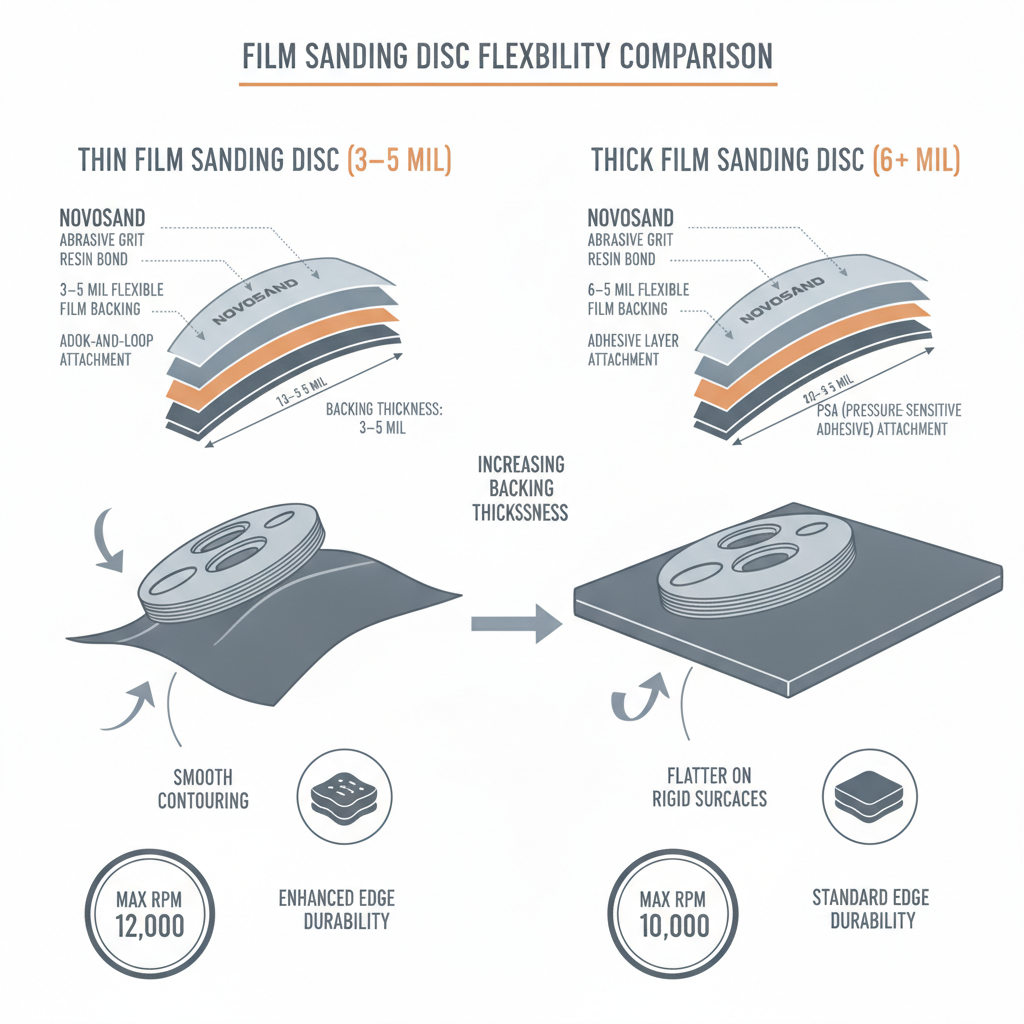
Backing thickness changes how the disc sits on the workpiece under pressure. A 3-5 mil film bends and follows contours much better, while a 6-7 mil film stays flatter and resists edge curl.
That difference shows up fast in real sanding. On automotive primer repair, a thinner film disc in P600 or P800 usually tracks body lines better and reduces faceting on curved panels. From my experience, if the backing is too stiff on a fender edge, the operator cuts through primer much faster. Then rework starts.
I saw this with a customer in automotive refinishing who tested 5-inch hook-and-loop film discs on orbital sanders. They compared a 3 mil aluminum oxide disc and a 6 mil version at the same grit. The 3 mil disc gave a cleaner blend on curved bumper corners, while the 6 mil disc stayed more stable on flat doors and hoods. Disc life on flat sanding improved by around 20-25% with the thicker backing.
In furniture production, the same rule applies differently. I always suggest thinner film for profiled MDF, chair parts, and routed edges, especially in P240 to P400 finishing steps. For flat lacquer sealer sanding on panels, a thicker film often runs smoother, especially with a firm pad and higher random orbital speed.
Thickness alone does not decide safe high-speed performance. Adhesive strength, hook-and-loop quality, pad hardness, disc diameter, and the rated maximum RPM all matter. To be honest, this is a common spec sheet gap.
I suggest testing at least two thicknesses on your actual sander. Compare finish quality, edge wear, and wear pattern before you standardize.
On curved automotive panels, a 3-5 mil film-backed disc in P600-P800 will generally conform more closely to body lines under hand pressure than a 6-7 mil film, which helps reduce faceting and lowers the chance of cutting through primer on edges.True
Film thickness directly affects bending stiffness. Thinner 3-5 mil film flexes more easily, so the abrasive face stays in contact across shallow curves and transitions instead of bridging high spots. In fine automotive sanding, that better conformity improves scratch uniformity on primers and makes edge pressure easier to control, whereas a stiffer 6-7 mil backing tends to stay flatter and can concentrate pressure at panel edges or crowns.
A thicker 6-7 mil film backing always produces a finer finish than a 3-5 mil film because the extra stiffness prevents abrasive grains from digging into the surface.False
Finish quality is not determined by backing thickness alone. Grit size, abrasive mineral, coat weight, bond, pad density, and sanding pressure all strongly influence scratch depth. A thicker film can improve flatness retention on broad flat panels, but on contours it may actually increase localized pressure and create deeper scratches or edge cut-through if it cannot follow the shape.
Are Film Sanding Discs Good Wet Sanding?
Film sanding discs are well-suited for wet sanding because polyester film backing resists water better than conventional paper backing. In automotive refinishing, fine grits such as P1500-P4000 support clear coat leveling and defect removal with reduced dust, lower heat, and less loading. Wet-sanding reliability, however, depends on the full disc construction, including adhesive, attachment system, and any anti-loading coating being rated for water exposure.
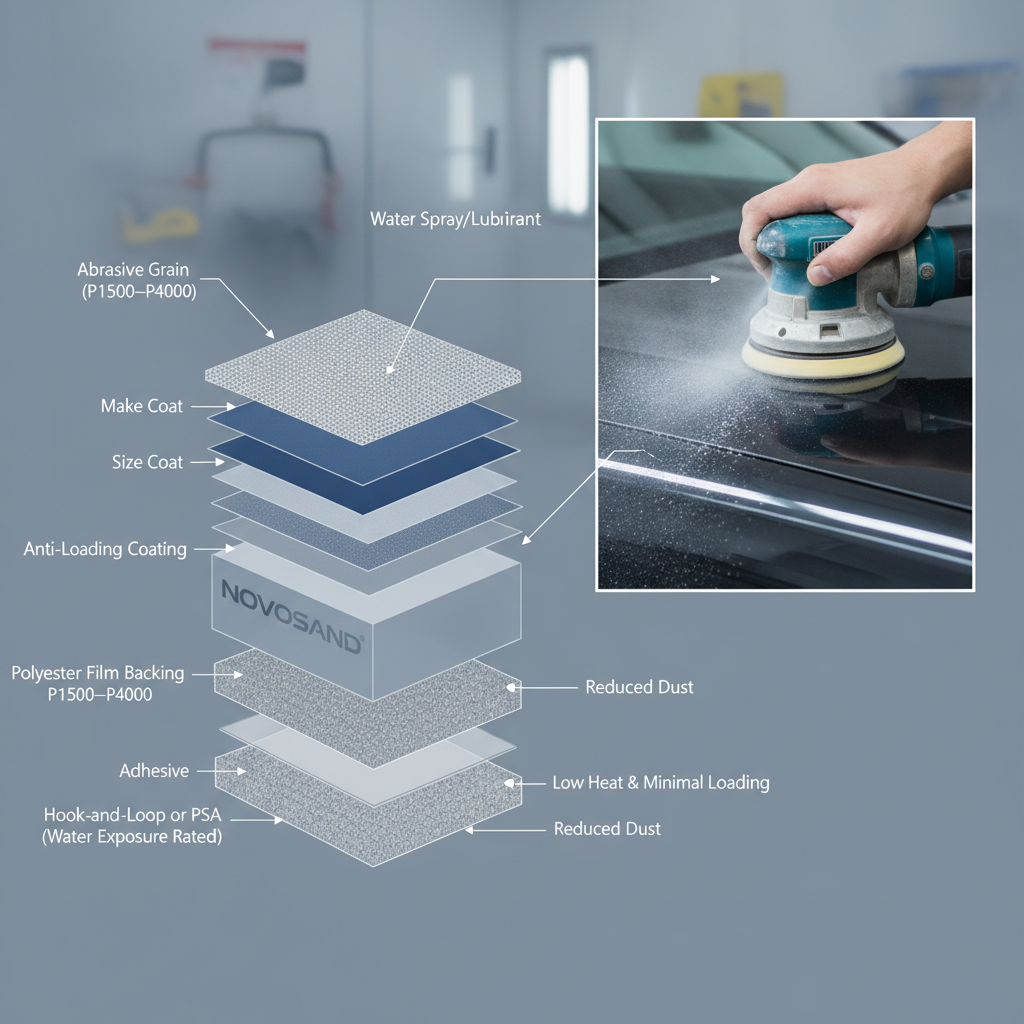
Wet sanding fails fast when only the backing resists water but the rest of the disc system does not. Film discs start with an advantage because polyester film handles water far better than paper, especially in fine finishing.
In automotive refinishing, this matters most at P1500 to P4000. Those grits are used for clear coat denibbing, orange peel leveling, and blend-line correction. I’ve seen body shops pair 5-inch film discs with a 5 mm foam interface pad, then run them wet on curved panels with much better scratch consistency. Less dust. Lower heat.
A customer in an automotive paint shop in Malaysia tested paper-backed and film-backed discs on clear coat defect removal. The film version lasted around 25-30% longer in wet runs and gave a more even finish before compounding. Their operators also reported less loading, which means paint residue did not clog the surface as quickly. That saved rework time.
But here is the important part—the backing alone does not decide wet performance. The make coat and size coat, which hold the abrasive grain, plus any anti-loading stearate8 layer, PSA adhesive, or hook-and-loop attachment all need to tolerate water exposure. I always suggest checking this point because the spec sheet gap often appears there, not in the grit rating.
To be honest, most wet-sanding complaints come from edge lift, hook degradation, or adhesive softening during longer cycles. If the coolant or water carries cleaners or additives, compatibility becomes even more important. I suggest running a short production trial first, ideally 30 to 60 minutes, before moving a film disc into regular wet finishing.
At P1500-P4000, a polyester film sanding disc is often more dimensionally stable than latex-impregnated paper when used wet, which helps keep scratch depth more uniform during clear-coat denibbing and blend-line correctionTrue
Polyester film absorbs essentially no water compared with paper-based backings, so it is less likely to swell, soften, or distort during wet sanding. In very fine automotive finishing grits, that dimensional stability matters because even small backing changes can alter pressure distribution and make scratch patterns less consistent on clear coat.
Any film-backed sanding disc can be safely wet sanded as long as the polyester backing is waterproof, even if the disc uses a standard dry-use stearated topcoat and non-water-resistant hook-and-loop adhesiveFalse
Wet sanding performance depends on the entire disc system, not just the backing. While polyester film resists water well, the resin bond, abrasive treatment, anti-loading coat, and attachment system must also tolerate water. A dry-use stearated coating or non-water-resistant hook-and-loop adhesive can soften, shed, or fail long before the film backing does.
How Should Film Disc Specifications Be Selected?
Film sanding disc specifications should be selected by matching grit, abrasive mineral, coating, and hole pattern to the substrate and finish target. P240-P800 suits shaping, primer sanding, and paint preparation, while P1000+ supports clear coat sanding and precision finishing. Aluminum oxide fits general use, silicon carbide suits paints and plastics, and anti-loading coatings plus matched dust extraction improve consistency and disc life.
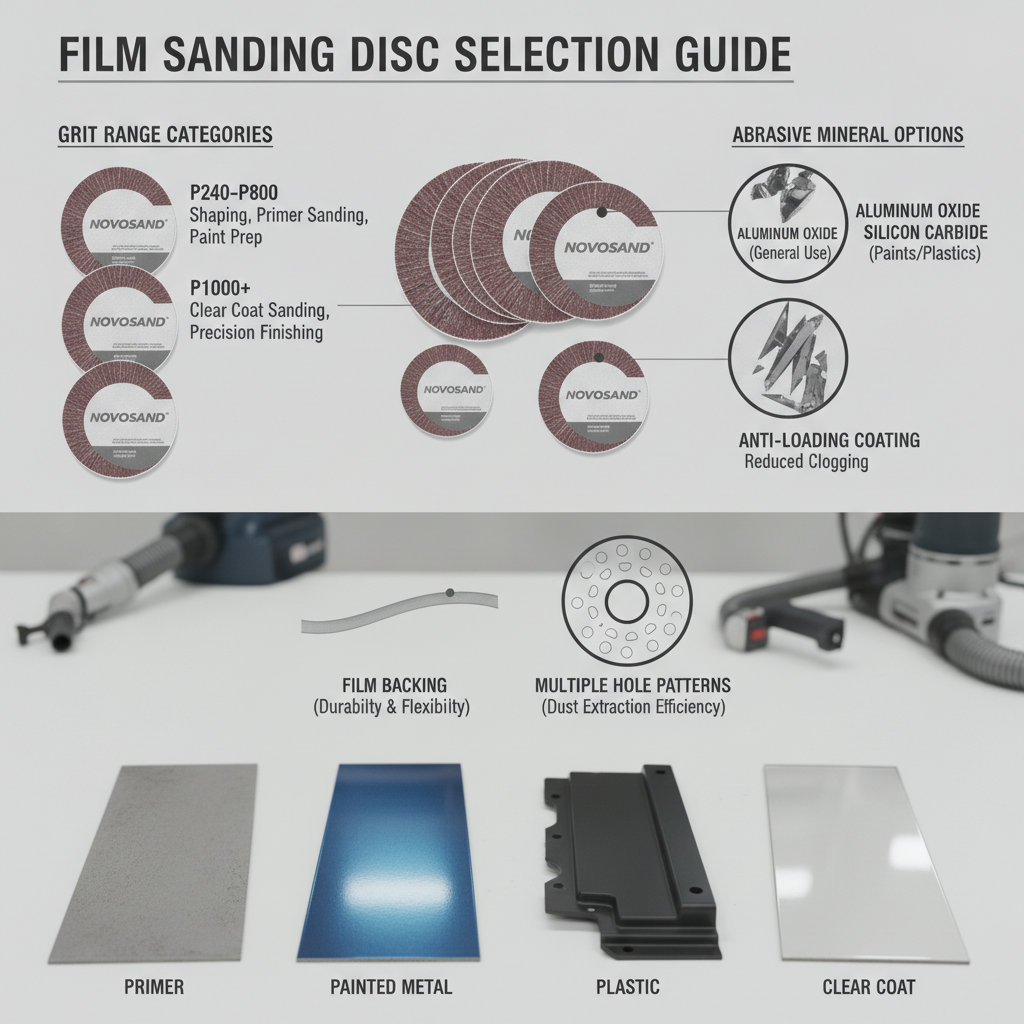
Start with the finish target, then work backward to the disc spec. If the job is primer leveling, paint prep, or fine surface blending, film discs usually perform best from P240 to P800.
For automotive refinishing, I often see P320, P500, and P800 used on 5-inch or 6-inch hook and loop discs with dust extraction. A repair shop customer in Southeast Asia switched from paper to film for primer sanding and cut scratch rework by around 20%. The smoother film backing kept the scratch pattern tighter. That matters before topcoat.
Abrasive mineral also changes the result. Aluminum oxide works well for general wood and metal sanding, while silicon carbide cuts sharper on paints, clear coats, plastics, and filler edges. I usually suggest P1000 to P2000 silicon carbide film for clear coat denibbing or polishing preparation, because it leaves a more uniform surface and reduces deep random scratches.
Coating and hole pattern are not small details. Anti-loading stearate helps when sanding primer, sealer, soft wood, or body filler, because it reduces clogging and heat buildup. On orbital sanders, I’ve seen an unmatched hole pattern shorten disc life by roughly 15-25% in dusty filler sanding. That is the spec sheet gap many buyers miss.
Film can sometimes let you skip a grit step, but I would always verify that in production. Check the surface visually, measure Ra if needed, and confirm paint adhesion or polishing results before changing the full sanding sequence. I suggest testing one batch first, not assuming equivalence by grit number alone.
For primer leveling and paint prep, selecting a film disc in the P240-P800 range based on the final finish target can reduce downstream scratch rework, because film backing holds a more uniform abrasive presentation and produces a tighter scratch pattern than comparable paper discs.True
The correct way to choose film disc specification is to start with the required surface finish, then work backward to grit and disc format. In refinishing, P240-P800 is a common functional range for primer sanding, paint preparation, and blending. Film backing is dimensionally stable and less prone to edge fray or backing distortion than paper, which helps maintain a more consistent scratch profile. That tighter scratch pattern can lower the amount of rework needed before coating.
For automotive refinishing, film sanding discs should generally be selected below P180 because finer grits like P320, P500, and P800 tend to skate on primer and are mainly intended for wood sanding rather than paint preparation.False
This is incorrect because automotive refinishing commonly uses finer film disc grits such as P320, P500, and P800 for primer sanding, paint prep, and fine blending. These grits are specifically chosen to control scratch depth and surface uniformity before topcoat application. Film discs are widely used in 5-inch and 6-inch hook and loop formats with dust extraction in auto body work, so saying finer grits are unsuitable for primer is misleading.
How Do Film Discs Compare on ROI?
Film sanding discs typically cost more per unit than paper-backed discs due to polyester backing, tighter thickness control, and more demanding coating processes. ROI should be measured by cost per finished part9 or area sanded, factoring in disc life, changeover time, defect rate, rework, and downstream polishing or painting labor. Structured A/B trials often show lower total process cost when finish consistency and durability improve.
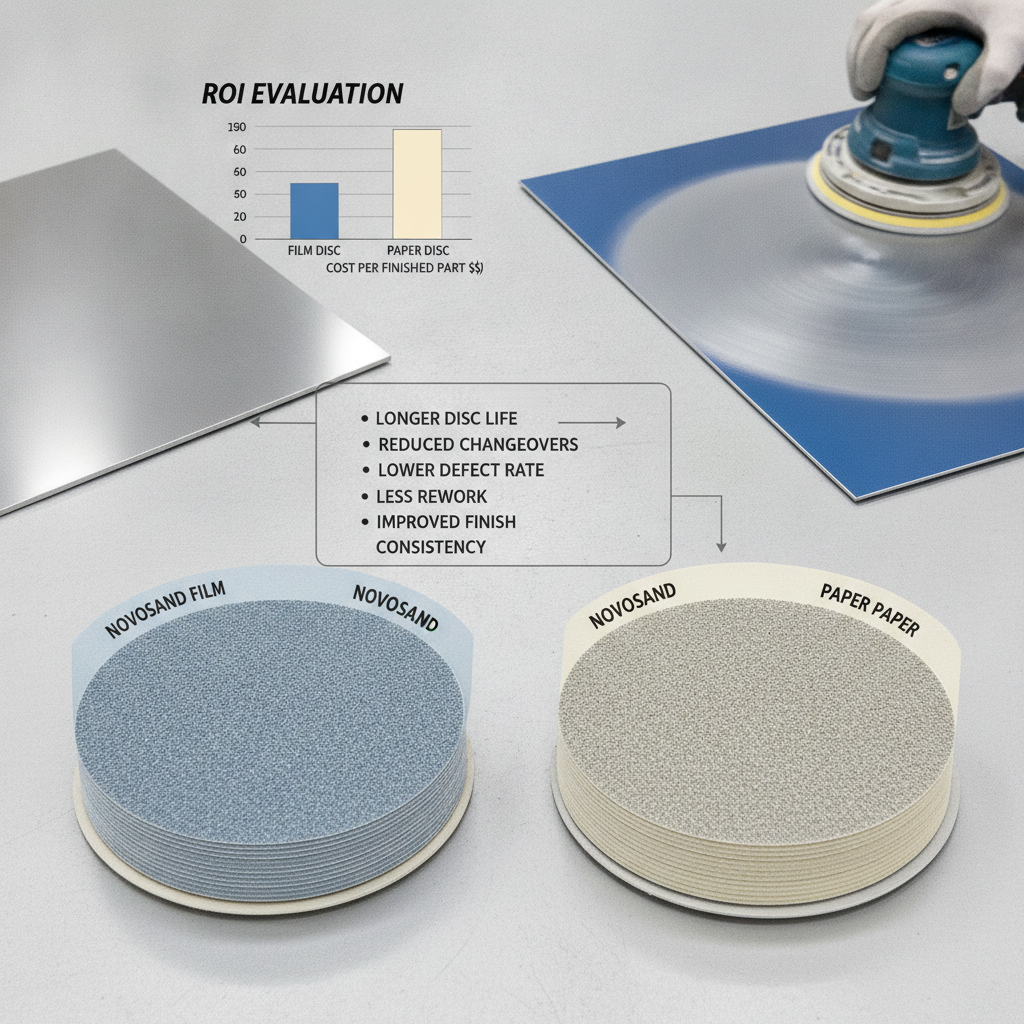
Unit price starts the conversation, but cost per finished part decides the result. Film discs usually cost 20-50% more than paper, especially in P320-P800 ranges with polyester backing and stearated anti-loading topcoats.
| Backing | Typical unit cost | Typical disc life | Main ROI driver | Best fit |
|---|---|---|---|---|
| Paper-backed | Lower | Standard | Lower purchase price | General wood sanding |
| Film-backed | Higher | Around 1.5-3x longer | Longer life, better finish consistency | Fine finishing, primer, clearcoat |
| Cloth-backed | Medium to high | High in heavy stock removal | Tear resistance | Aggressive metal work |
I saw this clearly with an automotive refinishing customer running 150 mm hook & loop discs in P400 and P600 for primer sanding. Their premium film disc cost about 35% more per piece, but disc use dropped from roughly 11 discs per shift to 7. Changeovers also fell by about 15 minutes per operator each day. That matters.
The bigger gain came downstream. Because the film backing stayed flatter and held grit more evenly, the scratch pattern stayed more consistent, so they reduced denibbing and polishing rework by around 20%. To be honest, this is the spec sheet gap many buyers miss. They compare carton price, not labor, defects, and repaint risk.
I always suggest a simple A/B trial over one full production run. Track disc count, sanding time, rejected parts, and polishing labor. If film cuts one grit step or reduces rework, procurement usually gets the answer quickly.
In fine grits like P320-P800, a film-backed disc that costs 20-50% more can still lower cost per finished part because its polyester backing and anti-loading topcoat often extend usable life to roughly 1.5-3x that of paper while reducing rework from inconsistent scratch patterns.True
ROI in finishing is driven more by finished parts per disc than by unit price alone. Film backing resists edge tearing and maintains a more uniform abrasive surface, which helps the disc cut consistently longer. In fine finishing, that longer life and more uniform scratch can reduce disc changes, scrap, and extra polishing steps, often offsetting the higher initial purchase price.
Film-backed sanding discs only deliver a better ROI when run wet, because dry sanding causes polyester film to shed grain faster than paper-backed discs in the P320-P800 range.False
Film discs are commonly used very successfully in dry sanding, especially in fine-grit finishing. Polyester film is valued for dimensional stability and tear resistance, not for rapid grain shedding. In many dry applications, film-backed discs actually outlast paper-backed versions, particularly when paired with stearated anti-loading topcoats that help control dust loading.
What Safety and Storage Factors Matter?
Film sanding discs can improve housekeeping and process safety by reducing nuisance dust when used with effective vacuum extraction10 and by resisting tearing that could release fragments. Safe use still depends on rated maximum RPM, compatible backing pads, secure attachment systems, and sound adhesive condition. Storage should remain flat, clean, dry, and away from heat, sunlight, and solvents, with FIFO rotation and visual inspection before use.
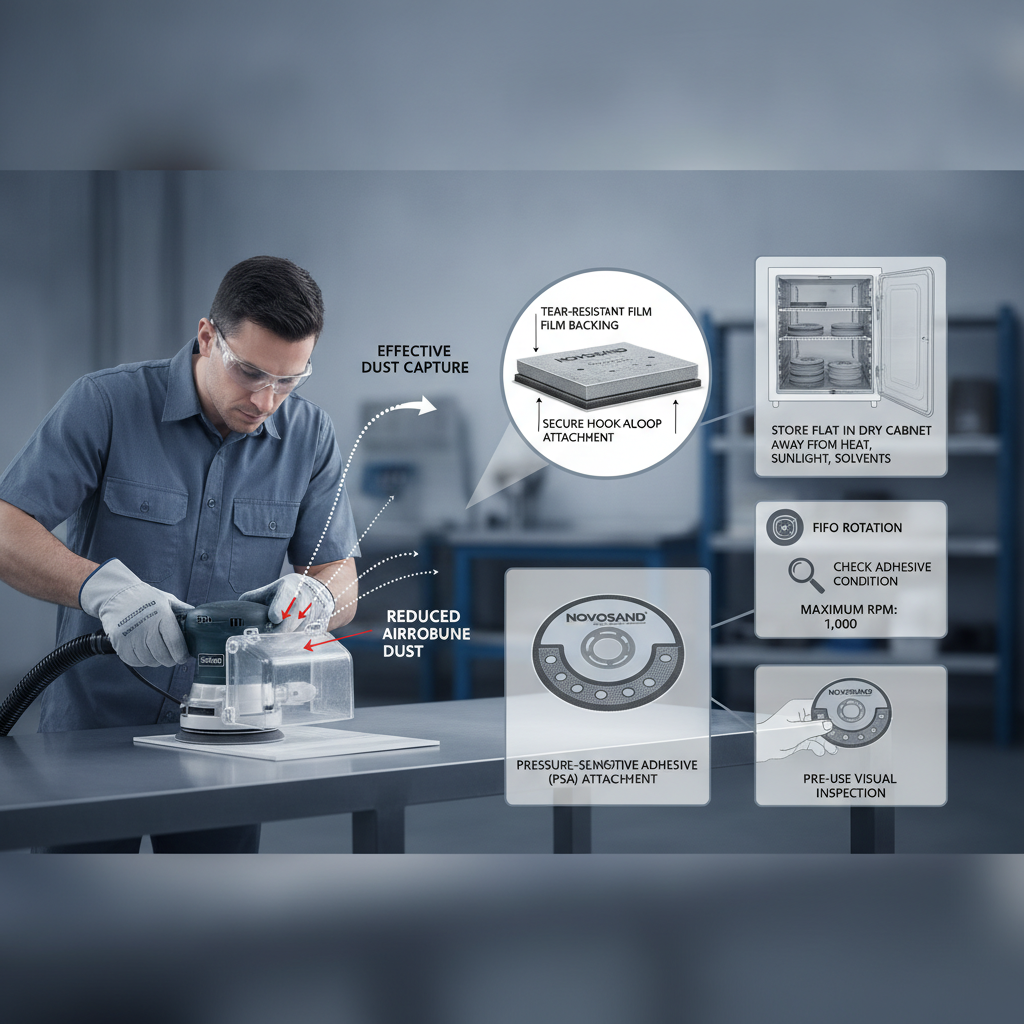
Most safety problems with film discs start at the interface, not the abrasive grain. If the disc spins above its rated RPM, sits on the wrong backing pad, or the hook-and-loop or PSA bond has aged, a stable film backing will not save the process.
A 125 mm film disc running on a random orbital sander at 10,000 RPM can work safely for full shifts, but only when the disc rating, pad density, and hole pattern match. In a furniture plant I supported, the team changed from paper to P180 film discs with ceramic-aluminum oxide grain and saw around 20% less airborne nuisance dust after improving vacuum extraction. Housekeeping got easier. More importantly, fewer torn edges meant fewer loose fragments around the operator zone.
I’ve also seen the opposite in an automotive refinishing shop. They stored PSA film discs near a window and a solvent cabinet for several months. The film backing stayed flat enough, but the adhesive softened, then migrated at the edge. That caused feeding issues on their automated loader and two discs released early during sanding. No injury, thankfully. Still a clear warning.
From my experience, storage discipline matters more than many buyers expect. Keep cartons flat, clean, and dry—ideally around normal workshop temperature, without direct sunlight or heater exposure. I always suggest FIFO rotation, plus a quick visual check for curling, contamination, edge lift, or adhesive bleed before loading discs into manual tools or robotic cells.
Safe use is mostly basic control, done consistently. Check RPM, pad compatibility, attachment condition, and storage history before each production run.
A 125 mm film sanding disc can run safely on a 10,000 RPM random orbital sander only if the disc's maximum RPM rating, the backing pad firmness, and the dust-hole pattern are all matched; a mismatch at the pad interface can cause edge flutter, heat buildup, or disc release even when the film backing itself remains intact.True
Film backing is dimensionally stable, but safety failures usually begin at the interface between disc, pad, and attachment system rather than in the abrasive grain. If the pad is too hard or soft for the disc design, or if the hole pattern does not align, vacuum flow and support become uneven. That can create localized heat, poor tracking, and extra stress on the hook-and-loop or PSA bond, which is why RPM rating and pad compatibility matter as much as the backing material.
Because film-backed discs are tougher than paper discs, they can be used safely above their rated maximum RPM as long as the operator chooses a softer backup pad and keeps the sander moving.False
Maximum RPM ratings are absolute operating limits, not guidelines that can be offset by pad choice or technique. Film backing may resist tearing better than paper, but overspeeding increases centrifugal load on the disc and on the attachment system. A softer pad does not remove that stress, and an aged hook-and-loop or PSA bond can fail suddenly at speed even if the abrasive surface still looks usable.
We’ve covered what makes a film sanding disc different, from polyester backing stability to more uniform scratch patterns, especially in finer grits. We also looked at why supplier checks should go beyond price and include film thickness tolerance and grain grading standards.
From my experience, this is where the spec sheet gap shows up. Many buyers compare grit and diameter only, but consistency often depends on backing control and grading discipline more than the basic product label suggests.
If you’re comparing film and paper discs for woodworking, metal, or refinishing work, feel free to reach out. I’m happy to help you review the technical details and what usually performs better in real production conditions.
References
-
Details the tear resistance, moisture resistance, and edge durability advantages of polyester film backing, and explains how it improves scratch uniformity and real-world service life. ↩
-
Explains how scratch patterns affect surface quality, rework rates, and coating performance, and provides practical guidance for roughness control and process optimization. ↩
-
Systematically explains the cutting behavior of silicon carbide in paint, clear coat, and plastic sanding applications, including suitable grit ranges and resulting surface finish quality. ↩
-
Explains how dimensional stability affects flat sanding, edge durability, and surface consistency, helping users select appropriate film thickness based on working conditions. ↩
-
Analyzes differences between paper-backed and film-backed abrasives in wet sanding environments, including water resistance, curling risk, and contact stability, helping users choose more reliable sanding solutions. ↩
-
Systematically explains the definition, measurement methods, and interpretation of Ra surface roughness, helping readers understand the relationship between sanding consistency and coating performance. ↩
-
Details the relationship between maximum rated RPM, abrasive disc safety, adhesive reliability, and high-speed sanding performance, helping prevent failure risks and improve efficiency. ↩
-
Provides an in-depth explanation of anti-loading stearate coatings, including how they reduce clogging, extend abrasive life, and improve efficiency in primer and filler sanding applications. ↩
-
Explains how to calculate ROI by incorporating abrasive life, changeover time, rework rates, and downstream labor, enabling more accurate comparison between paper-backed and film-backed solutions. ↩
-
Provides a systematic explanation of how dust extraction efficiency, hole pattern alignment, and particulate control affect workshop cleanliness and operator safety, helping optimize sanding system setup. ↩