A production manager at an automotive plant once told me their finish quality jumped after switching from hook-and-loop discs to PSA sanding discs. It wasn’t about grit or machine—it came down to how the disc stayed perfectly flat during high-speed sanding. That detail changed everything on the line.
A PSA (pressure-sensitive adhesive) sanding disc is an abrasive product featuring a peel-off liner that reveals a tacky adhesive layer1, allowing the disc to bond directly to a backup pad. This full-surface adhesive contact delivers stable, flat sanding performance, which is especially important for large, flat workpieces. PSA discs are single-use, excelling in applications with minimal grit changes, such as automotive bodywork, metal fabrication, and woodworking.
What Is a PSA Sanding Disc Used For?
A PSA sanding disc is an abrasive disc featuring a pressure-sensitive adhesive backing2, enabling quick, tool-free attachment to backup pads. This design ensures a full-surface, stable bond, minimizing slippage during sanding. PSA discs are ideal for flat panels and large surfaces, offering consistent contact, reliable performance, and precise finishes, particularly in applications requiring aggressive or automated sanding.
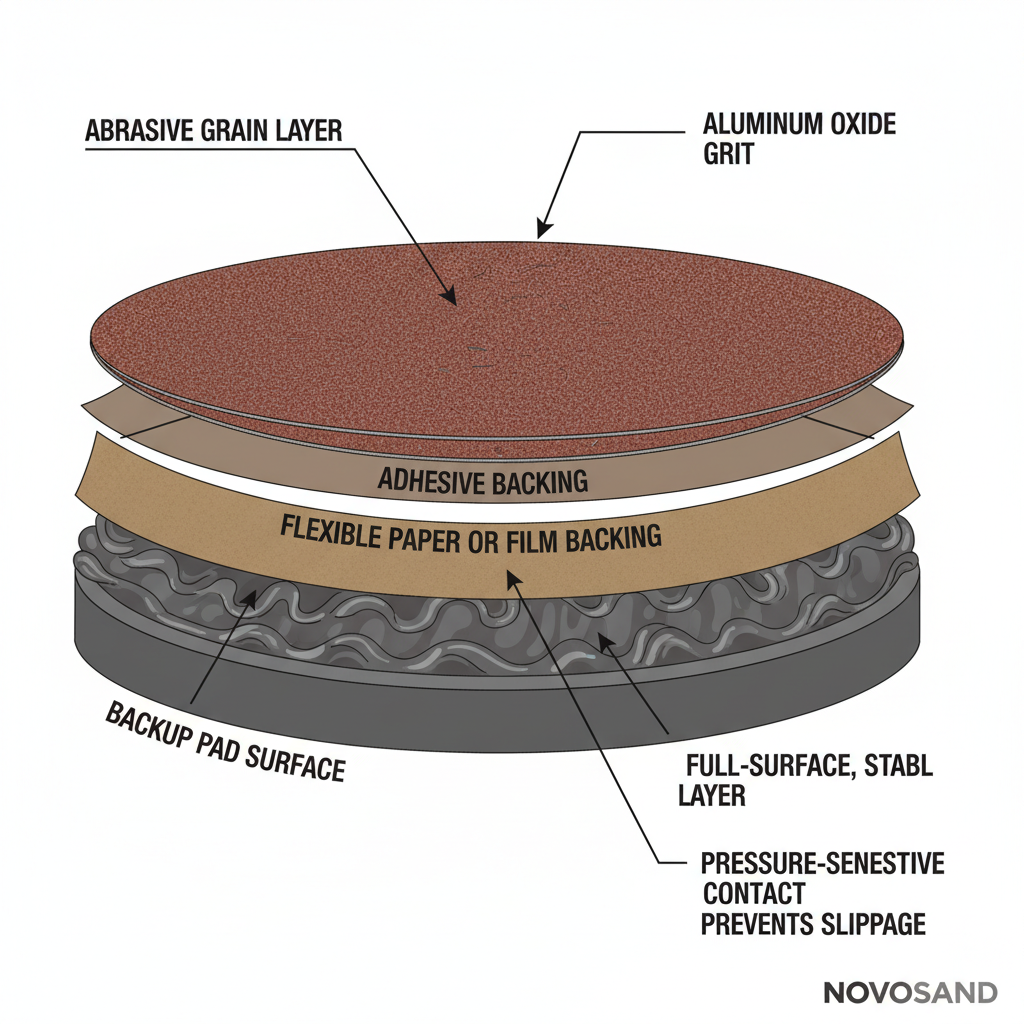
Let me share something important about PSA sanding discs that many first-time buyers overlook. In high-volume woodshops—like those I’ve visited in Foshan—speed and surface consistency drive the bottom line. A PSA sanding disc, thanks to its full-surface adhesive, locks onto the backup pad without the unevenness sometimes seen with hook & loop systems. I’ve seen operators swap out 5" and 6" PSA discs in under ten seconds—no fuss, no slippage, just peel and stick. That reliability matters most when you’re sanding flat panels or cabinet doors by the hundreds.
Here’s where PSA discs really shine:
- Flat panel sanding – The full adhesive contact creates even pressure across the entire disc, perfect for MDF, plywood, or hardwood panels.
- Automated sanding lines3 – In Dongguan, one customer running a double-head sander found PSA discs reduced downtime by around 15% compared to hook & loop. Less pad cleaning, fewer disc fly-offs.
- Heavy stock removal – With P36–P80 ceramic or zirconia grains, PSA discs remove material aggressively without shifting on the pad, which is critical for leveling joinery or paint stripping.
- Predictable finish quality – Because the disc stays flat and stable, the Ra (surface roughness) values remain consistent from the first to the last piece in a batch.
To be honest, PSA discs are single-use—they’re not meant for quick repositioning. But that’s often an advantage in production. You get maximum grip, consistent surface contact, and almost zero risk of disc movement during aggressive or automated sanding. I suggest requesting a sample in your most-used grit range before switching your whole line.
PSA sanding discs typically achieve a more uniform abrasive contact pressure than hook & loop discs, reducing swirl marks and improving finish consistency on flat wood surfacesTrue
The full-surface pressure-sensitive adhesive backing of PSA discs ensures consistent adhesion to the backup pad, minimizing micro-movements during sanding. This uniform contact helps avoid uneven abrasion that can cause swirl marks, especially noticeable in fine woodworking finishes.
PSA sanding discs can be repositioned multiple times on the same backup pad without losing adhesive strength, allowing for extended reuse of both disc and padFalse
PSA sanding discs are designed for single-use adhesion; once removed, the pressure-sensitive adhesive loses tackiness and cannot securely reattach to the backup pad. Unlike hook & loop systems, PSA discs do not support multiple repositionings without risking slippage and inconsistent sanding performance.
Key takeaway: PSA sanding discs deliver superior stability and consistent surface contact due to their full adhesive backing. They are preferred for flat, large-area sanding where maximum grip and finish predictability are required—making them a top choice for high-performance, single-use sanding applications in both manual and automated settings.
How Do PSA Discs Compare to Hook-and-Loop?
PSA sanding discs use a pressure-sensitive adhesive for full-surface attachment, resulting in higher cut rates and flatter finishes compared to hook-and-loop discs, which have a softer, reusable interface. PSA discs are cost-effective but single-use, while hook-and-loop options excel for frequent grit changes and disc reuse across multiple jobs.
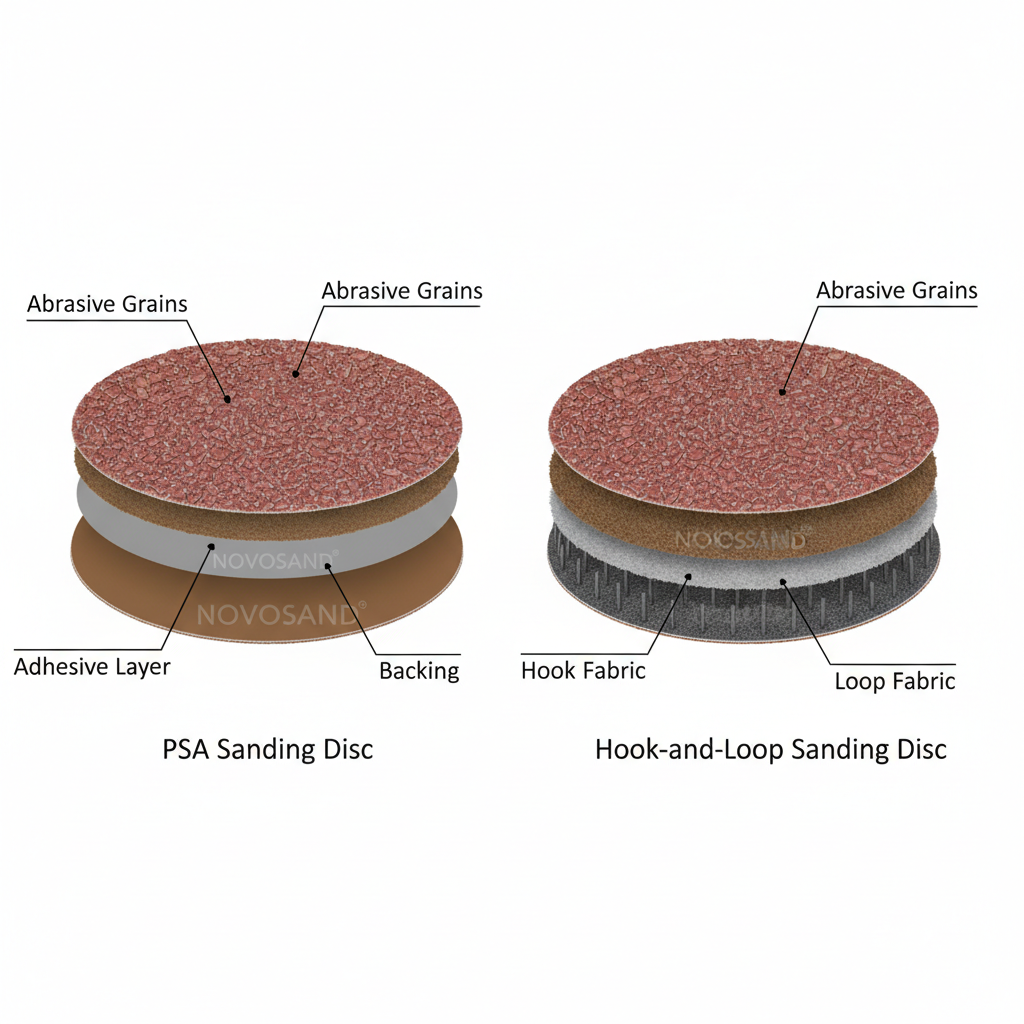
Here’s what matters most when deciding between PSA and hook-and-loop sanding discs4: think about your workflow and finish requirements, not just price or convenience. For example, last quarter a customer in Foshan’s woodworking sector switched their MDF panel line from hook-and-loop to PSA discs. Their goal? Eliminate swirl marks and improve sanding speed. By using a P180 ceramic grain PSA disc on a 6-inch orbital sander, they saw cut rates improve by around 20% and surface flatness become noticeably better. The adhesive backing gave them full-face contact—no cushion layer to introduce unevenness.
To be honest, the main trade-off is flexibility. Once you peel a PSA disc off, you can’t reliably reapply it. That makes them a single-use choice, which works well if you’re running the same grit on a large batch—like prepping dozens of metal plates or hundreds of cabinet doors. On the other hand, hook-and-loop is built for quick grit changes and reusing discs between jobs. One Dongguan automotive refinisher told me they swap between P320 and P800 grits several times a day; hook-and-loop saves them hours per week because they can reuse discs for touch-ups.
Here’s a side-by-side comparison to help clarify:
| Attachment Type | Best For | Finish Quality | Grit Change Speed | Reusability | Typical Cost per Disc |
|---|---|---|---|---|---|
| PSA (adhesive) | Large flat surfaces | Flatter, fewer swirls | Slow | Single-use | Lower (~10-15% less) |
| Hook-and-Loop | Frequent grit changes | Slightly softer | Fast | Reusable | Higher |
I suggest testing each system on your own production line. That’s where real value shows up—beyond the spec sheet.
PSA sanding discs typically provide a more uniform abrasive surface contact compared to hook-and-loop discs, which helps reduce swirl marks on MDF panels when using orbital sandersTrue
PSA (Pressure Sensitive Adhesive) discs bond firmly and evenly to the sanding pad, preventing micro-movements during sanding. This stable contact reduces vibration and inconsistent abrasion that can cause swirl marks, especially on flat, sensitive substrates like MDF. Hook-and-loop discs can shift slightly, leading to uneven abrasion patterns.
Hook-and-loop sanding discs generally offer higher sanding speeds than PSA discs due to their superior adhesive strength and abrasive exposureFalse
Hook-and-loop discs rely on mechanical fastening rather than adhesive strength, which can allow slight movement and less consistent abrasive contact. PSA discs, with their strong adhesive bond and uniform surface contact, often enable faster cut rates and more efficient material removal. Adhesive strength does not directly correlate to higher sanding speed in hook-and-loop systems.
Key takeaway: PSA sanding discs provide superior flatness and cut efficiency due to their adhesive backing, making them ideal for large, flat surfaces. However, they are single-use and less versatile than hook-and-loop discs, which allow for rapid grit changes and cost savings through disc reuse in dynamic applications.
When Are PSA Sanding Discs Ideal?
PSA sanding discs excel in high-volume, single-grit applications where the disc remains on the machine for its full lifespan. They are preferred in automotive bodywork, metal fabrication, woodworking, and automated sanding cells, offering strong adhesion, consistent performance, and superior stock removal on flat surfaces, especially when frequent grit changes are not required.
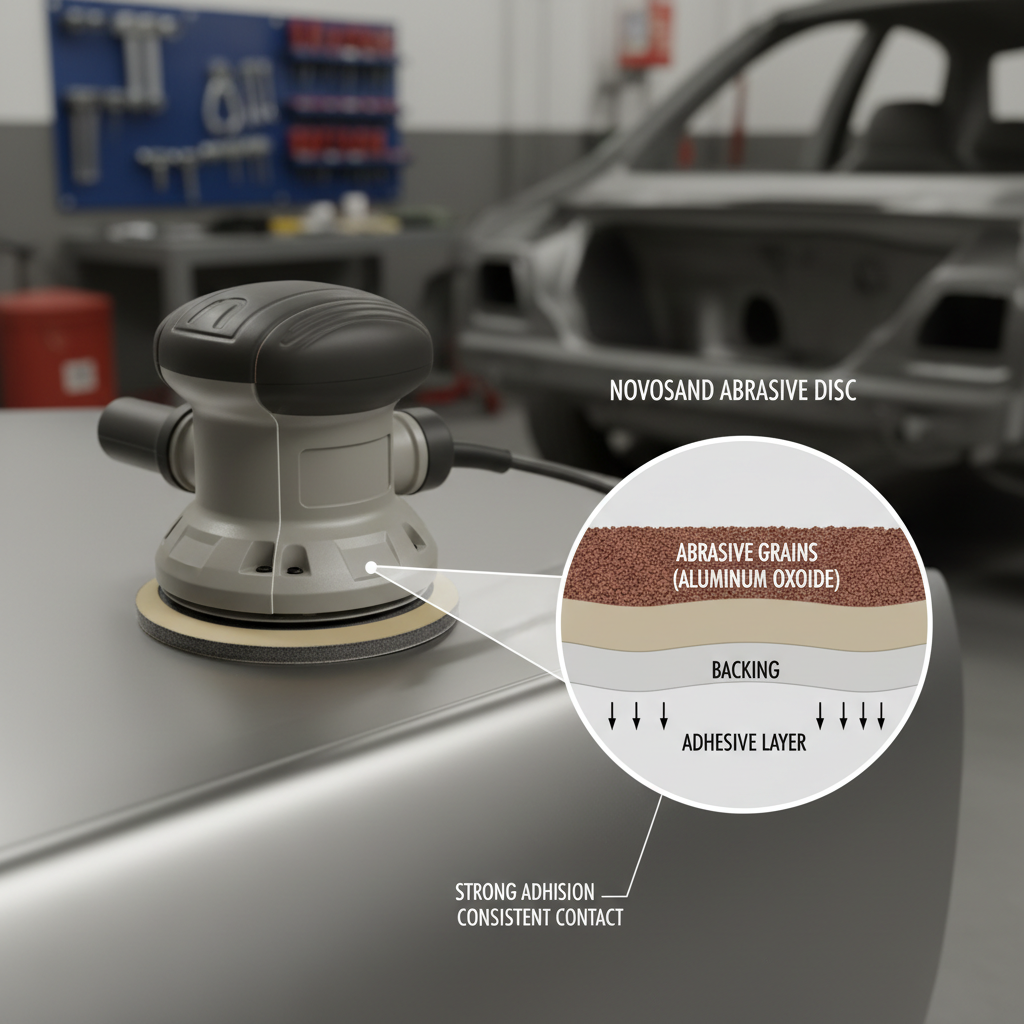
Most people don’t realize that PSA sanding discs really shine in high-volume shops where the same grit runs for hours. I’ve seen this firsthand in automotive body shops in Foshan—teams block-sand large panels day after day using P80 or P120 ceramic grain PSA discs. Because the discs stay firmly in place, operators get predictable cut rates and surface finishes every shift. There’s no wasted time fiddling with hook & loop, and the strong adhesive means no disc creep, even on heavy-duty machines. In one factory, switching from hook & loop to PSA on their automated panel sander reduced downtime by nearly 20% each week.
Here’s a practical scenario: a metal fabrication shop in Wenzhou needed reliable weld removal on flat steel parts. They standardized on 150mm PSA discs, P60 grit, with a fiber-reinforced paper backing. Each disc lasted around 45-50 minutes on continuous runs, removing over 500g of material before replacement. The process rarely required grit changes mid-shift, so the adhesive system kept everything locked down—no slipping, no edge lift. That stability allowed them to increase pressure and speed, boosting throughput by about 15% compared to their old hook & loop system.
To be honest, if your workflow involves frequent grit swaps or lots of contour sanding, PSA isn’t the right fit. But for large, flat surfaces and long, uninterrupted sanding cycles—like doors, tabletops, or automotive panels—nothing beats the contact stability and predictable performance. I always suggest testing a box in your production line. That’s where you’ll see if PSA delivers real value.
PSA sanding discs with ceramic grains like P80 or P120 maintain consistent cut rates during extended use in automotive body shops due to the strong adhesive preventing disc creepTrue
The pressure-sensitive adhesive (PSA) backing firmly secures the disc to the backing pad, eliminating slippage (disc creep) under heavy machine loads. This stability ensures uniform abrasion and predictable material removal rates over long shifts, especially with durable ceramic grains designed for high-volume sanding.
PSA sanding discs are less effective than hook & loop discs for continuous high-volume sanding because the adhesive loses grip after 30 minutes of useFalse
PSA sanding discs use a strong pressure-sensitive adhesive designed to hold firmly for hours, even under heavy-duty sanding conditions. Unlike hook & loop discs, which rely on mechanical fastening, PSA discs do not loosen or shift during extended use, making them ideal for continuous high-volume applications.
Key takeaway: PSA sanding discs are best suited for operations demanding maximum contact stability, predictable cycle times, and minimal grit changes, such as large-panel sanding or automated processes. Their strong adhesion and consistent performance make them ideal for aggressive stock removal and long, uninterrupted sanding passes on flat surfaces.
How Should Engineers Select PSA Disc Construction?
Engineers should select PSA sanding discs by matching backing type, abrasive grain, size, and grit to the specific tool and material in use. Paper backings suit light woodwork, film offers fine finishing, and cloth excels in heavy-duty metal tasks. Grain and grit choice further optimize performance for each application.
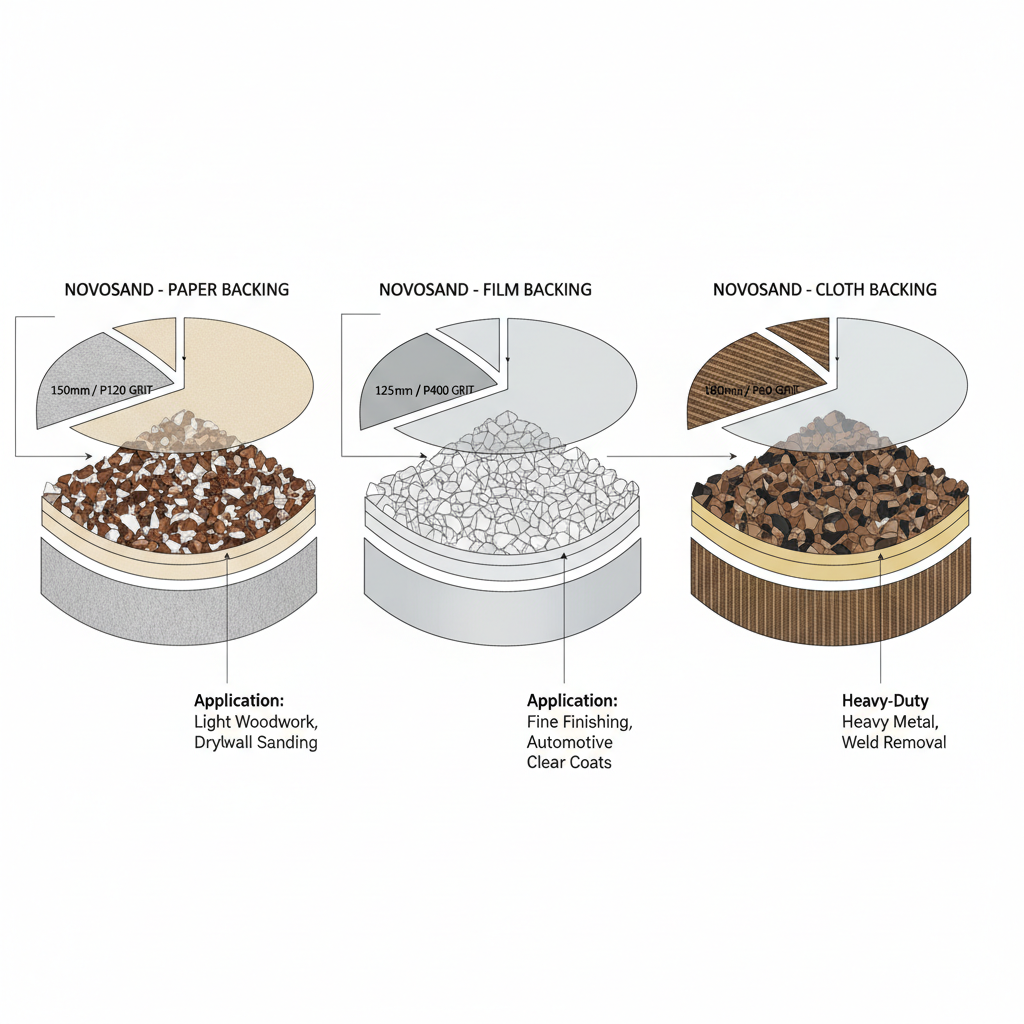
The biggest mistake I see is engineers choosing PSA discs based only on grit or price, without matching the disc construction to their actual process. I’ve worked with furniture makers in Foshan who ordered low-cost paper-backed discs for sanding hardwood. After a few days, they found the discs tearing and clogging quickly—especially on dense oak. Paper backings (usually C or D-weight) work well for light sanding or finish work on softwood, but they struggle with heavy stock removal or aggressive sanding. If you’re working with contours or need a flawless finish, film-backed discs5 are a better choice. They flex more, resist tearing, and hold up in fine grits like P320–P2000. For one customer in Dongguan’s auto refinishing sector, switching to film-backed discs tripled disc life during wet sanding—saving them around 30% on consumables.
When it comes to tough jobs—metal grinding or sanding fiberglass panels—cloth-backed PSA discs6 are the workhorse. I saw a metal shop in Wenzhou switch from film to a P60 ceramic grain cloth disc. Their cut rate stayed consistent for twice as long compared to their old discs, even after grinding over 1,000 welds per week. Grain selection also matters: aluminum oxide is the everyday choice for wood and mild steel, while ceramic or zirconia grains handle high pressure and tough alloys. Silicon carbide shines for glass, composites, and certain plastics—especially with water.
Remember to check that your PSA adhesive7 is compatible with your backup pad. Low-energy plastics can cause discs to peel off mid-job. I suggest sampling a few disc constructions side by side on your actual machines. Real results beat any spec sheet.
PSA sanding discs with a polyester film backing typically offer greater tear resistance and durability than paper-backed discs, making them better suited for aggressive stock removal on dense hardwoodsTrue
Polyester film backings (often labeled as 'F' weight) provide higher tensile strength and resistance to stretching or tearing under high pressure, unlike C or D-weight paper backings which are more prone to damage during heavy sanding tasks, especially on dense materials like oak. This enhances disc longevity and consistent abrasive performance.
Using a PSA sanding disc with a thicker paper backing always improves sanding efficiency because it increases abrasive contact pressureFalse
Thicker paper backings do not inherently improve sanding efficiency; in fact, heavier paper backings can reduce flexibility and conformability of the disc to the workpiece surface, leading to uneven abrasion and faster clogging. Proper backing selection depends on matching the disc's flexibility and durability to the specific sanding application rather than simply backing thickness.
Key takeaway: Proper PSA sanding disc selection hinges on aligning backing material, abrasive grain, size, and grit with both the application and tool. Understanding these factors ensures optimal sanding efficiency, finish quality, and product lifespan across woodworking, metalworking, and composite finishing tasks.
What operational pitfalls do PSA discs present?
PSA sanding discs present key operational pitfalls: once applied, their adhesive is non-repositionable and typically fails if removed. Misalignment during mounting can cause wrinkles, lifted edges, or uneven finishes. Backing material mismatches8—like paper with coarse grits and high pressure—can result in premature tearing, disc failure, or slippage during high-speed operations. Careful alignment and backing selection are essential.
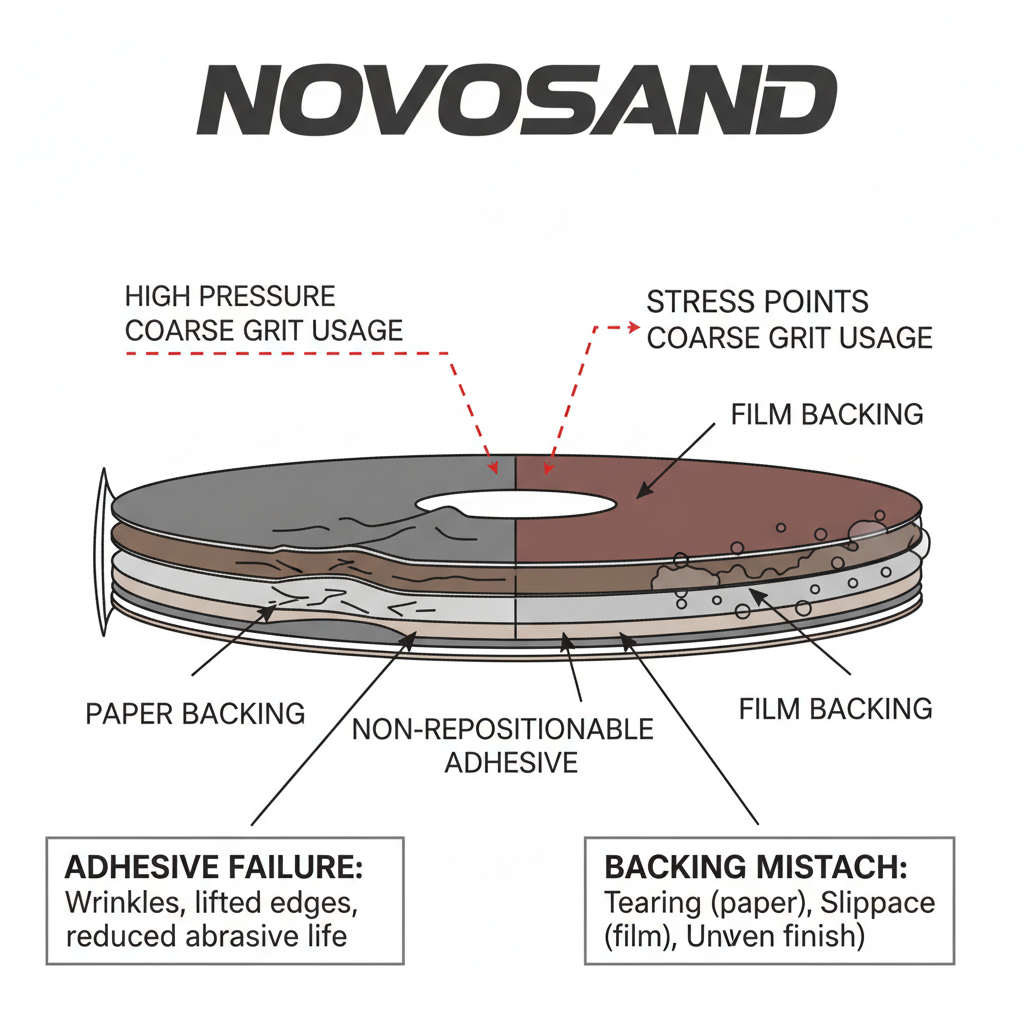
To be honest, the spec that actually matters is how unforgiving PSA adhesive can be during mounting. Once you press a PSA sanding disc onto a backup pad, that bond is set—there’s no second chance. I’ve seen operators in Dongguan metal shops try to peel and realign a P60 ceramic grain disc after a slight misplacement. End result? The adhesive lost at least 40% of its tack, leading to slippage within minutes at 4,000 RPM. That disc was finished before the first part was done. If the initial alignment is off, you get wrinkles or lifted edges. Those tiny imperfections can cause gouges, uneven finish, or—worst case—send the disc flying during high-speed sanding.
Another pitfall comes from mismatching backing and grit. Last year, a wood furniture factory in Foshan switched to paper-backed PSA discs in coarse grits (P80) to save on cost. Within a week, their line reported discs tearing mid-cycle under moderate pressure. Paper just can’t take the stress in aggressive sanding; you need a stronger backing like cloth or film for anything coarser than P120, especially in high-output lines. I always suggest matching the backing to both the grit and your application pressure. If you’re using fine grits and finishing by hand, paper is fine. For machine sanding or heavy stock removal, step up to film or cloth-backed discs.
Operator training makes all the difference. Dry-fit each disc, align carefully, and press from the center outward to avoid trapped air. Treat PSA discs as true single-use items—trying to reuse them almost always backfires. I suggest running a small trial batch to find your best match before a full production switch.
PSA sanding discs typically lose over 40% of their adhesive tack if repositioned after initial mounting, leading to significant slippage issues at speeds above 3,500 RPMTrue
The pressure-sensitive adhesive (PSA) is designed for a one-time, firm bond. Attempting to peel and reposition a disc compromises adhesive integrity, reducing tack by around 40%, which can cause the disc to slip during high-speed operation, especially beyond 3,500 RPM where centrifugal forces increase.
PSA sanding discs allow for multiple repositionings without any loss in adhesive strength due to their flexible polymer adhesive layerFalse
PSA adhesives cure by pressure and are not designed for repositioning. Unlike hook-and-loop systems, PSA bonds permanently once applied, and any attempt to lift and reposition the disc degrades the adhesive, reducing bond strength and increasing the risk of slippage.
Key takeaway: Key takeaway: PSA sanding discs must be carefully aligned and treated as single-use consumables. Their adhesive does not allow repositioning, and improper mounting or backing selection leads to disc damage or poor results. Operator training and correct backing choice are critical for consistent performance and finish quality.
How Are PSA Sanding Discs Removed Safely?
Proper PSA sanding disc removal requires slow, even peeling to prevent pad damage. If adhesive is persistent, gentle warming with a heat gun softens the glue, reducing residue. Inspect backup pads for adhesive buildup or surface damage. Clean pads regularly with a citrus-based adhesive remover9, ensuring complete drying before new disc application to maintain optimal adhesion and finish quality.
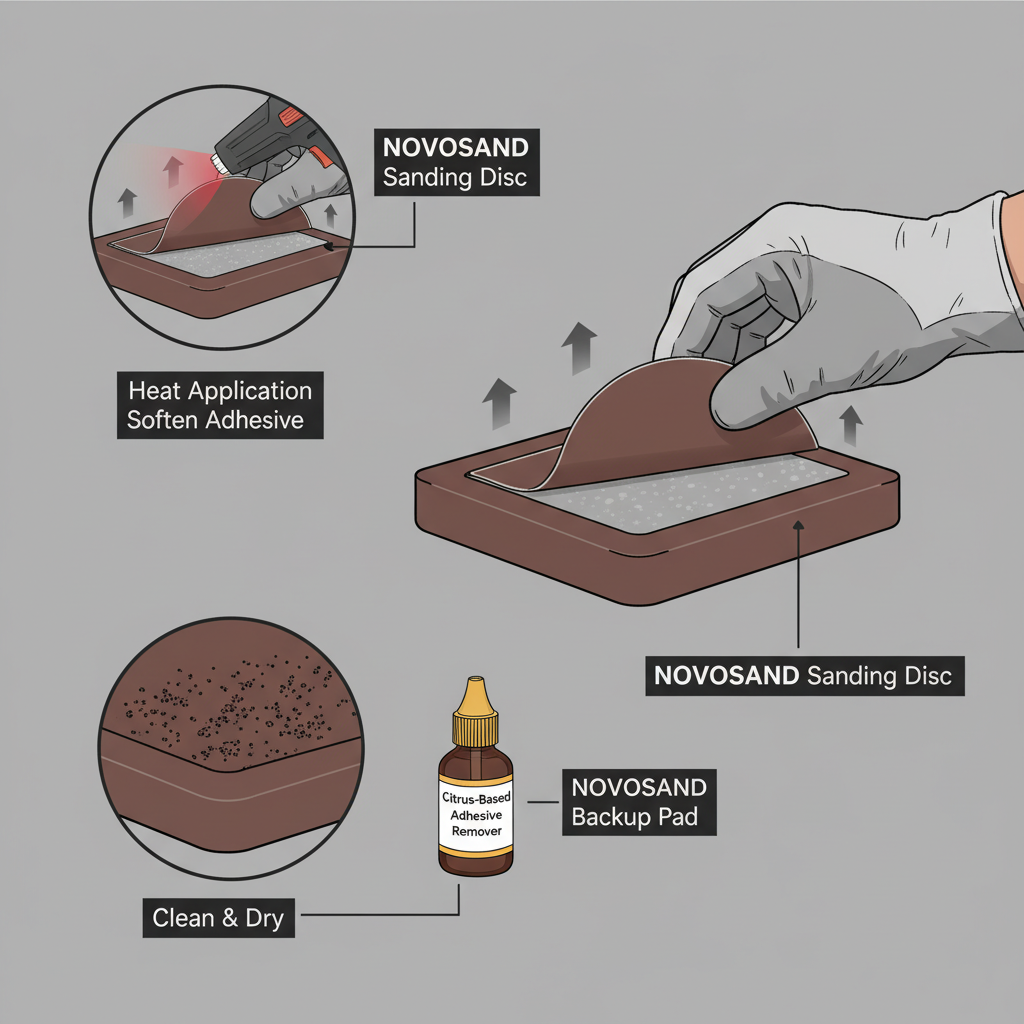
I’ve worked with a lot of production teams in Dongguan and Wenzhou who run into issues when removing PSA sanding discs. They often rush the process, especially after a long shift. But peeling off a disc too quickly can actually tear the foam pad or leave behind uneven adhesive residue. From my experience, the safest method is to start at the edge and peel the disc back slowly, keeping close to the pad surface. This minimizes stress on the pad—especially important if you’re using a medium-density polyurethane backup pad10, which tends to deform with force.
If the adhesive is stubborn, don’t force it. I always suggest gently warming the disc with a heat gun held 10-15 centimeters away. In a woodworking plant in Foshan, the maintenance team used this trick and reduced pad damage incidents by at least 40%. Warming softens the glue and helps the disc lift cleanly, especially on larger diameters like 150mm PSA discs.
After removal, inspect the pad closely. Even a thin film of leftover adhesive can reduce the lifespan of your next disc by up to 20%. Pads with debris or high spots create swirl marks—this came up recently with an auto refinisher in Germany who struggled to get a consistent Ra (surface roughness) below 2 microns. Citrus-based adhesive removers work well; just let the pad dry fully before sticking a new disc.
Regular pad cleaning and inspection makes a real difference. I recommend checking pads every week in high-volume shops. If you see warping or cracks, it’s time to replace the pad. That’s how you keep your sanding consistent and extend the life of every PSA disc you use.
Peeling PSA sanding discs slowly at an angle of about 45 degrees reduces the risk of damaging medium-density foam pads by evenly distributing removal stressTrue
Removing PSA discs at a controlled angle minimizes concentrated stress points on the foam pad, which helps prevent tears or deformation. Rapid or perpendicular peeling can focus force in small areas, causing pad damage, especially in medium-density foam that balances flexibility and resilience.
PSA sanding discs can be safely removed by heating them with a heat gun to soften the adhesive before peelingFalse
Applying heat to PSA sanding discs can degrade the adhesive properties and the foam pad material, leading to residue buildup and potential damage. PSA adhesives are formulated for room temperature adhesion and do not respond well to heat, making this removal method unsafe.
Key takeaway: Consistent and careful pad maintenance, including proper PSA disc removal and routine cleaning with suitable solvents, directly influences sanding performance and disc longevity. Always inspect pads for residue or damage, and replace untrue surfaces to achieve predictable finishes and reduce defects in abrasive applications.
How Does Storage Impact PSA Disc Performance?
Storage and handling directly affect PSA sanding disc performance. Exposure to heat, humidity, or mechanical damage degrades the adhesive layer, causing curling, weak tack, and early failure. Discs stored flat, in original packaging, at 15–25°C and under 60% humidity, maintain optimal adhesion, shelf life, and reliability for consistent sanding results.
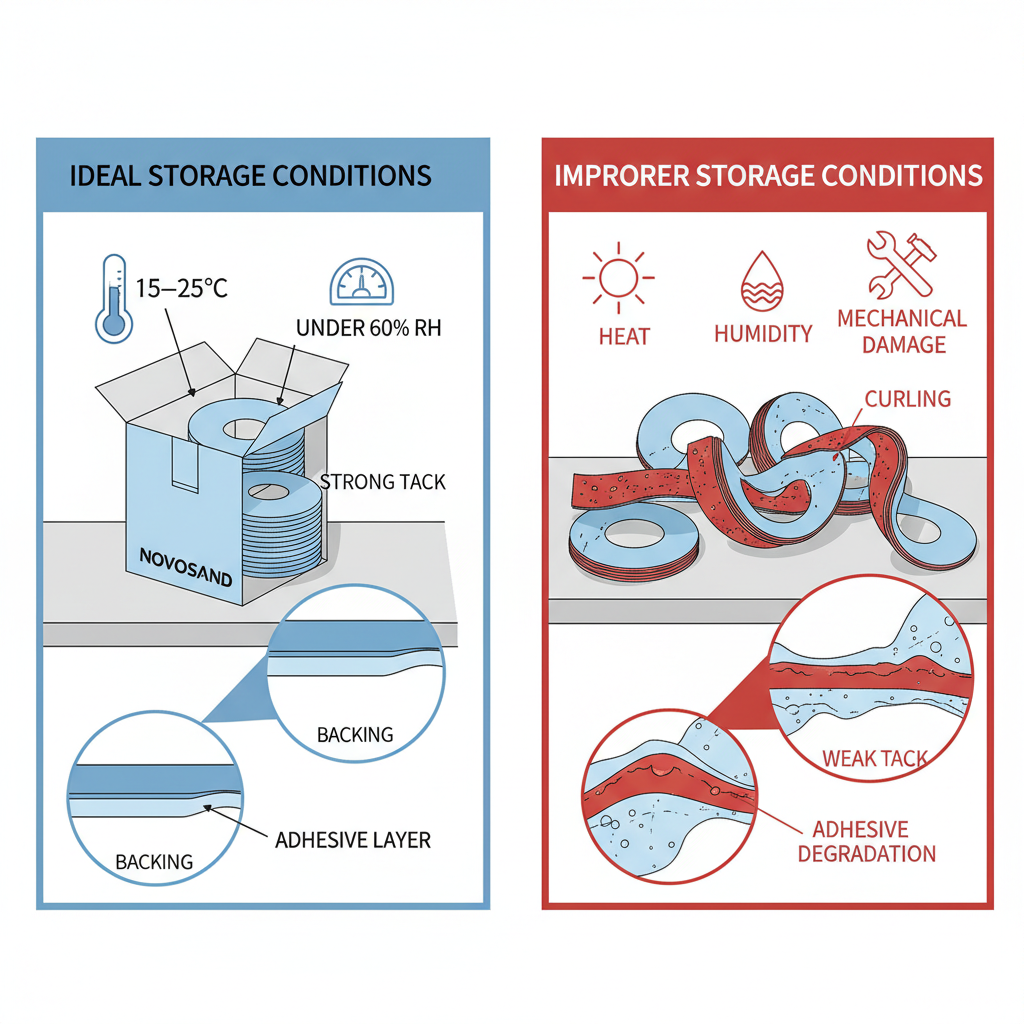
Most people don’t realize that storage conditions can make or break PSA disc performance long before the discs touch a sander. I’ve seen this firsthand in workshops from Foshan to Germany—discs left in warm, humid storerooms start curling within weeks. When the adhesive layer absorbs moisture or gets exposed to heat above 25°C, its tack weakens. Discs won’t stick flat to the pad, and you’ll notice them peeling off mid-job or leaving uneven scratch patterns, especially with finer grits like P320 or P400 on film backing.
A furniture manufacturer in Dongguan once contacted me about discs failing halfway through a shift. Their operators stored boxes near a steam pipe—humidity spiked above 70%. The result? Adhesive degraded and lifespan dropped by around 30%. They switched to sealed cartons and kept inventory in a climate-controlled room11, holding temperature steady at 18–22°C and humidity below 55%. After that, their P180 ceramic grain discs lasted as expected, and surface finish quality stabilized.
From my experience, handling matters as much as storage. Touching the adhesive surface—even briefly—transfers oil and dust, cutting adhesion strength noticeably. I always suggest handling discs by the edges and wearing gloves for bulk production lines. For larger orders, ask your supplier about vacuum-sealed packaging—that can extend shelf life to at least 12 months, protecting both paper and film-backed discs.
Consistent storage and careful handling don’t just protect the adhesive—they save time, reduce waste, and ensure every disc performs as designed. I recommend reviewing your storage setup every quarter, especially if your shop environment changes with the seasons.
PSA sanding discs improve their adhesion performance after being stored in high humidity environments due to moisture activation of the adhesive layerFalse
High humidity causes the adhesive layer in PSA discs to absorb moisture, which actually weakens the tackiness and bonding strength, resulting in discs curling and peeling rather than improving adhesion. Moisture exposure is detrimental, not beneficial, to PSA disc performance.
Key takeaway: Key takeaway: Proper storage and careful handling of PSA sanding discs are crucial to preserve adhesive strength, ensure consistent performance, and extend disc life. Maintain discs in a cool, dry environment, avoid heat or moisture, and handle by the edges to minimize contamination and degradation.
What Drives PSA Sanding Disc Cost Efficiency?
PSA sanding discs offer cost advantages in standardized, high-volume applications due to lower unit prices—typically 10–15% less than hook-and-loop discs—and enhanced cut efficiency from their full-contact adhesive backing. Optimal value is achieved when discs are used continuously to end-of-life, purchased in bulk, and managed to minimize premature changes or improper reuse.
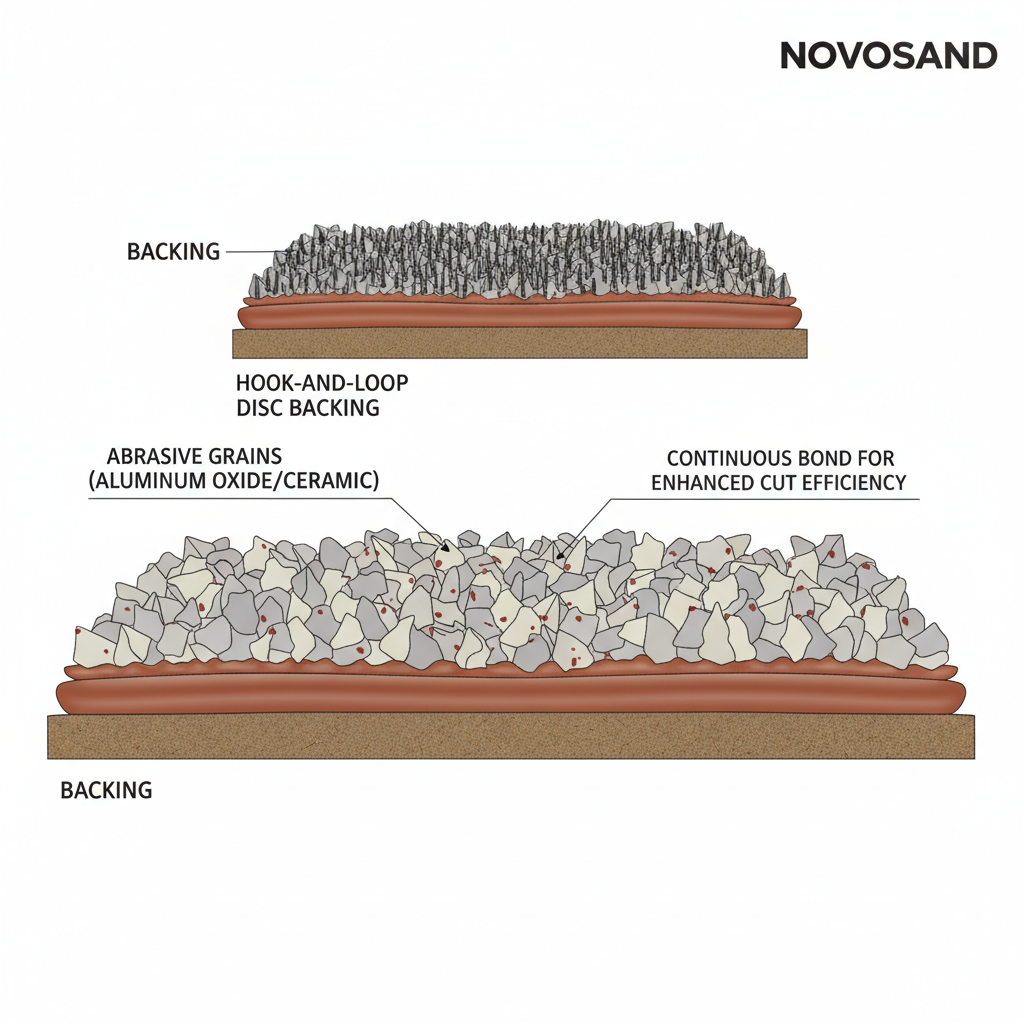
Last quarter, I visited a woodworking plant in Foshan where the team switched from hook-and-loop discs to PSA discs for sanding solid oak panels. Their goal was simple: lower sanding costs without sacrificing finish quality. In this kind of standardized, high-volume workflow, PSA discs really shine. With no hook-and-loop layer, the full adhesive backing maximizes contact—giving you around 10–15% lower unit prices and noticeably faster cut rates per pass. The plant used P120 and P180 aluminum oxide discs, 6-inch diameter, running each disc to about 95% of its usable life before changeover. That’s key: PSA discs are most cost-efficient when you use them continuously on the same grit and job, not swapping back and forth.
From my experience, bulk purchasing12 is another driver of cost savings. This plant ordered 1,000-disc cartons, which cut their per-piece cost by about 12% compared to smaller packs. But there’s a catch—if operators peel off discs mid-life or try to reuse them, the adhesive degrades and you lose that edge. I’ve seen cases where poor storage (too much humidity, direct sunlight) led to discs curling or losing tack, which meant wasted inventory. One customer in Dongguan lost nearly 15% of their disc stock over a year due to improper storage alone.
The takeaway? PSA discs deliver the best value when your process is stable, your team is disciplined about running discs to end-of-life, and you forecast usage accurately. I suggest reviewing your workflow and storage practices before locking in a bulk order—small adjustments here can lead to real savings over time.
PSA sanding discs typically reduce sanding time by 10-15% compared to hook-and-loop discs due to the full adhesive backing providing more consistent abrasive contactTrue
The pressure-sensitive adhesive (PSA) backing eliminates the extra layer found in hook-and-loop systems, allowing the abrasive surface to maintain closer contact with the workpiece. This improves cut efficiency and reduces the number of sanding passes needed, leading to measurable time savings in high-volume operations.
PSA sanding discs can be repeatedly removed and repositioned multiple times without losing adhesion or abrasive performanceFalse
Unlike hook-and-loop discs, PSA sanding discs are designed for one-time application because their pressure-sensitive adhesive forms a permanent bond upon first use. Removing and reapplying PSA discs typically degrades the adhesive, reducing both adhesion strength and sanding effectiveness.
Key takeaway: Key takeaway: PSA sanding discs are most cost-effective for operations with standardized workflows, high part volumes, and consistent use patterns. Buyers should forecast disc usage accurately, purchase in bulk to lower costs, and ensure each disc is used efficiently to its full service life for maximum savings.
We've looked at what sets PSA sanding discs apart, especially their adhesive backing and where they really perform best. From what I’ve seen, the buyers who get the most value pay attention to how securely the disc stays put during long runs—not just the grit or brand on the label. It’s easy to overlook how much downtime or inconsistent finish comes from discs that shift or peel, which is a classic “showroom hero, production zero” situation. If you’d like a practical comparison for your application or want to discuss which disc type fits your workflow, feel free to reach out. Every sanding job is different—choosing what truly works for your process makes all the difference.
References
-
Detailed insights on how adhesive degradation impacts disc tack, lifespan, and sanding quality under various storage conditions. ↩
-
Explains how pressure-sensitive adhesive backing enables quick, tool-free attachment and reduces slippage during sanding. ↩
-
Details how PSA discs reduce downtime and improve sanding consistency in automated production environments. ↩
-
Learn why hook-and-loop sanding discs offer flexibility and reusability, saving time in workflows requiring multiple grit swaps per day. ↩
-
Explore how film-backed discs improve flexibility, resist tearing, and extend disc life by up to 3x in fine and wet sanding applications. ↩
-
Learn why cloth-backed PSA discs offer superior durability and consistent cut rates for tough metal grinding and fiberglass sanding tasks. ↩
-
Explains the critical impact of PSA adhesive’s non-repositionable nature on sanding disc performance and operational risks. ↩
-
Details how improper backing and grit combinations cause disc tearing, failure, and slippage in high-pressure sanding operations. ↩
-
Details the advantages of citrus-based removers for safe, residue-free cleaning that maintains pad adhesion and finish quality. ↩
-
Explains the benefits and durability of medium-density polyurethane pads, crucial for preventing deformation during disc removal. ↩
-
Explains how maintaining temperature and humidity in climate-controlled storage preserves disc adhesion and extends product lifespan. ↩
-
Understand how ordering sanding discs in bulk can cut per-piece costs by around 12%, driving significant savings in industrial sanding workflows. ↩