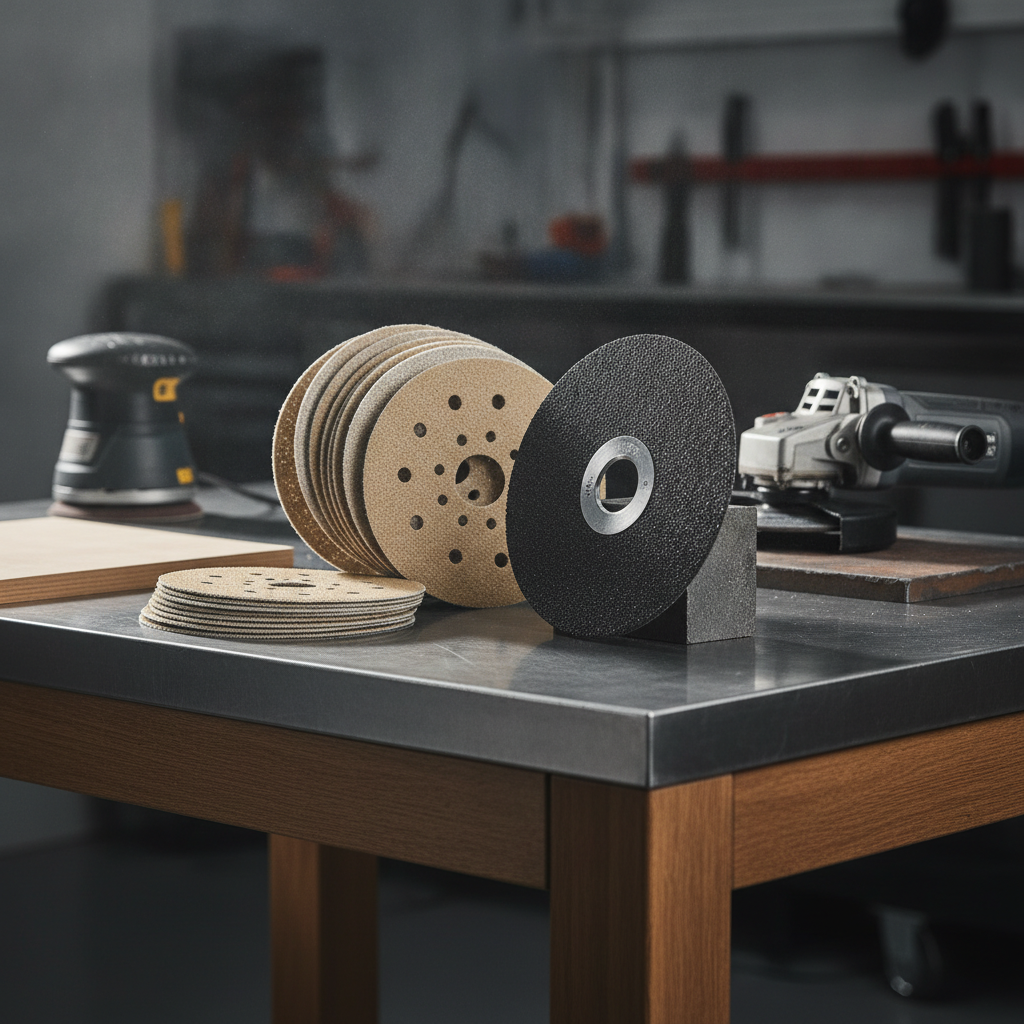
Sanding Disc vs Grinding Disc: Key Differences Buyers Miss
A metal fabrication buyer once sent me a photo of a torn hook-and-loop sanding disc and asked why it failed so fast on weld seams. The short answer was simple: they were asking a finishing disc to do a grinding wheel’s job.
Sanding discs and grinding discs differ primarily in construction, intended load, and surface outcome. Sanding discs are typically coated abrasives built on paper, film, cloth, fiber, or mesh backings for controlled removal, blending, and finish preparation. Grinding discs are typically bonded abrasive wheels, often in depressed-center forms for angle grinders, designed for aggressive stock removal, weld removal, beveling, and edge shaping.
How do sanding and grinding discs differ?
Sanding discs are typically coated abrasives, with abrasive grains bonded to paper, film, cloth, fiber, or mesh backings for controlled removal, blending, and surface preparation. Grinding discs are typically bonded abrasives1, with grains held in a rigid resin or vitrified matrix for aggressive stock removal, weld removal, beveling, and edge shaping. Selection depends on construction, intended purpose, load capacity, tool speed, and safety rating.
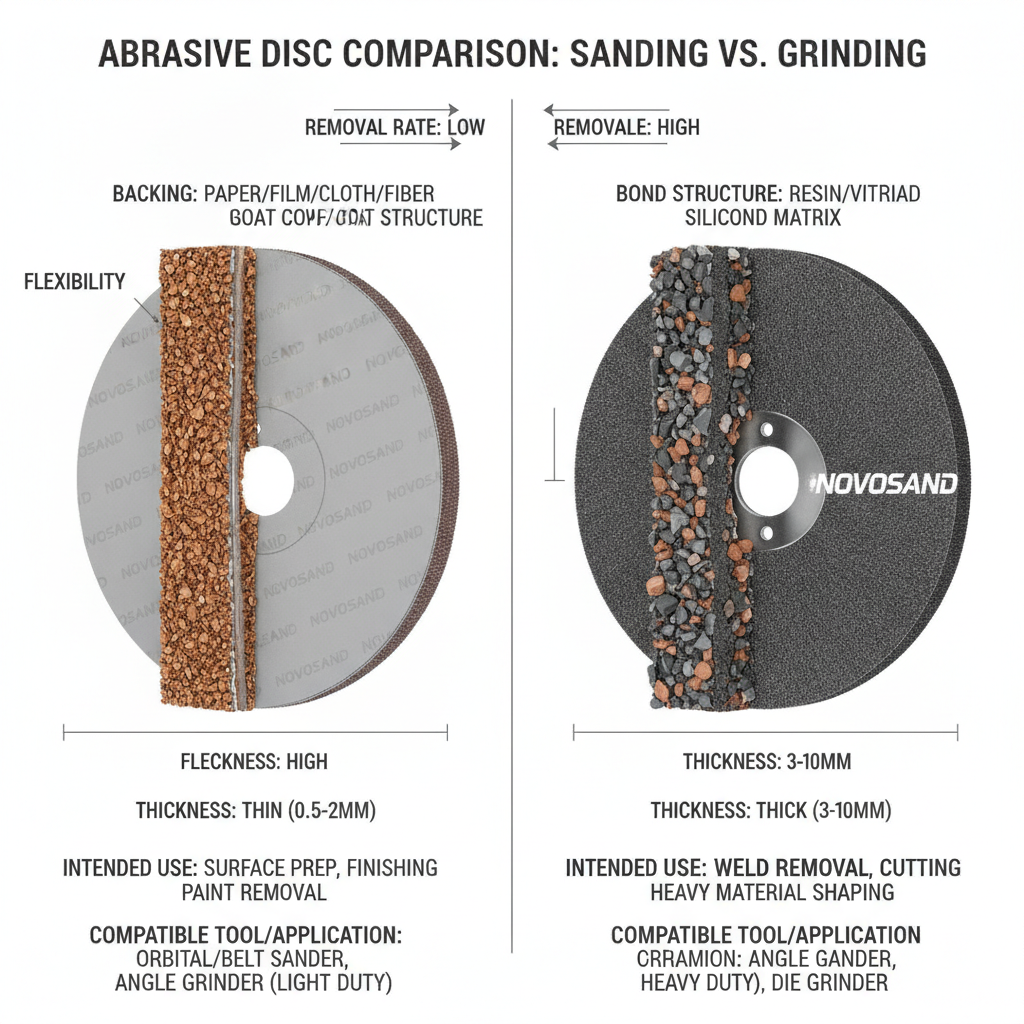
The difference starts with how the disc is built and how much force it can carry. Sanding discs use coated abrasive grains on paper, film, cloth, fiber, or mesh backings, so they cut in a more controlled way and leave a defined scratch pattern.
Grinding discs work differently. They use a bonded structure, where the grains sit inside a rigid resin or vitrified matrix, often in a Type 27 depressed-center shape2 for angle grinders. That design handles much higher side load and heat, which is why grinding discs suit weld removal, beveling, and fast stock removal on steel.
I’ve seen this distinction matter a lot in metal fabrication. One customer making stainless cabinets used 125 mm P40 ceramic fiber discs for weld blending, then switched to P80 and P120 film-backed sanding discs for surface refinement before coating. The fiber disc removed material around 2 to 3 times faster, but it left a much deeper scratch. The sanding disc gave better finish consistency and reduced rework by around 20%.
In woodworking, the gap is even clearer. A furniture factory in Vietnam used mesh sanding discs in P180 to P320 on orbital sanders for sealer sanding, because loading3 resistance mattered more than raw aggression. If they had used a grinding wheel, the rigid bond and high cut rate would have damaged edges immediately.
Borderline products can confuse buyers—that’s the spec sheet gap I often see. Flap discs and resin fiber discs are coated abrasives, but they behave closer to grinding tools on angle grinders. I suggest starting with the job goal first: bulk removal or surface refinement, then matching disc construction, grit, speed rating, and guard setup.
"AFalse
"This
Because sanding discs use coated abrasive grain on cloth or fiber backings, they generally tolerate more side pressure and grinding heat than bonded grinding discs of the same diameterFalse
This is false because bonded grinding discs are specifically engineered for higher grinding forces, side loading, and thermal stress. A coated sanding disc may be aggressive, especially on fiber backing, but its backing-and-bond system is still less rigid and less heat-tolerant than a true bonded grinding disc intended for angle-grinder applications.
Why Is Sanding Disc Misuse Risky?
Misapplying a sanding disc in place of a grinding disc can cause rapid wear, overheating, loading, tearing, pad detachment, and inconsistent surface results because many PSA, hook-and-loop, film, paper, and mesh discs are not built for high lateral loads or edge pressure. Conversely, grinding discs can remove excess material, leave deep scratches, and damage thin or delicate substrates during finishing work.
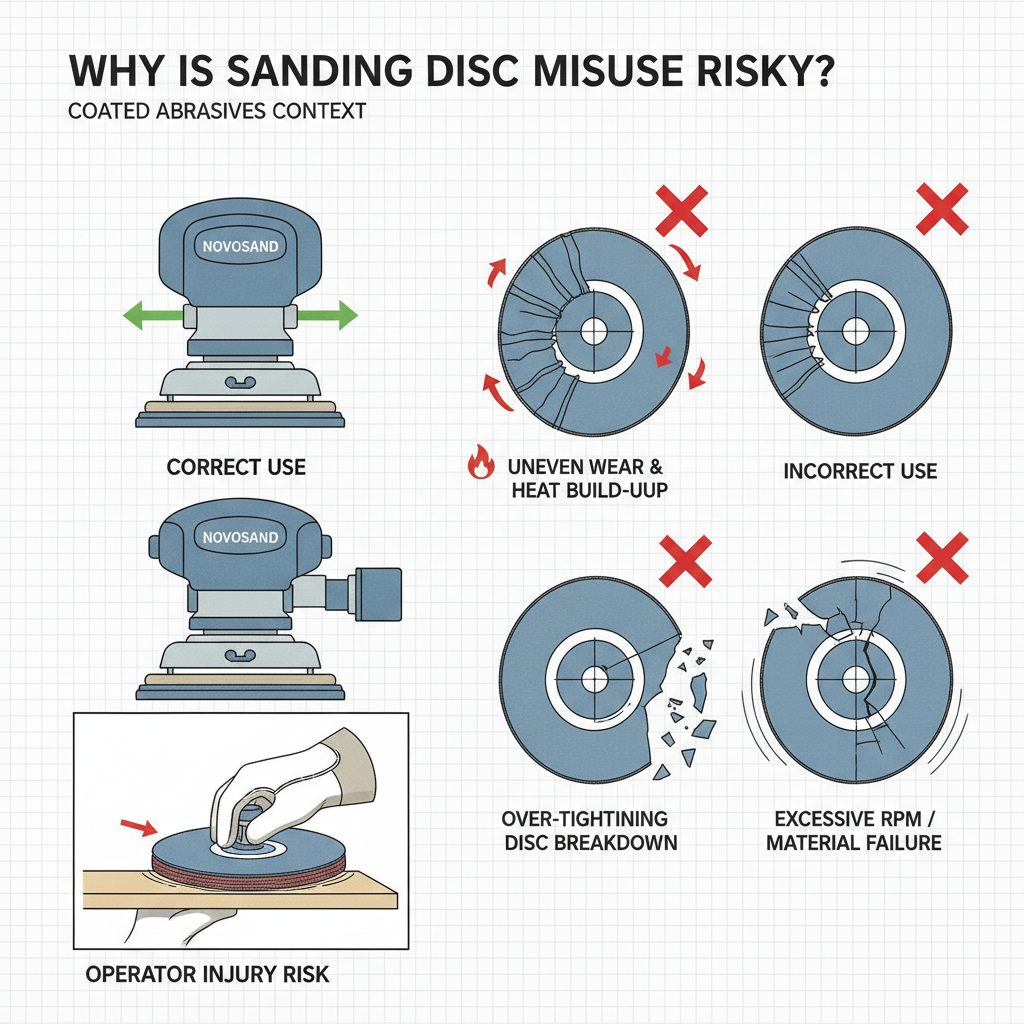
Risk rises fast when a finishing disc meets grinding pressure. A 125 mm PSA paper disc5 or hook-and-loop film disc may cut cleanly at P120, but under weld removal it can overheat, load with metal fines, and fail within minutes.
I saw this with a metal fabrication customer in Guangdong. Their operators used P60 paper-backed sanding discs on angle grinders to knock down weld beads on mild steel frames.
Disc life fell to around 3–5 parts, and edge tearing started almost immediately. Worse, the adhesive softened, so a few discs shifted on the backup pad.
Surface quality also bounced around. That is classic consistency roulette.
Typical misuse problems include:
- Rapid wear — thin paper or film backings lose cut fast under high edge pressure
- Loading — metal dust or soft coatings clog the grain and raise heat quickly
- Tearing or pad detachment — common with PSA and lighter hook-and-loop systems
- Deep scratches — happens when a grinding disc replaces a P80–P180 finishing step
- Substrate damage — thin sheet metal, body filler, wood veneer, and primers heat up easily
Grinding discs and bonded wheels handle lateral load because their structure is rigid and thicker.
Sanding discs are built for controlled scratch patterns, blending, and finish prep—not aggressive beveling.
From my experience, this distinction matters most on thin parts.
One automotive refinishing line switched from a coarse grinding wheel to a P80 fiber disc for filler shaping and cut rework by roughly 20%.
A 125 mm P60 paper-backed PSA or hook-and-loop sanding disc used on an angle grinder for weld bead removal can fail after only 3-5 mild-steel parts because grinding pressure and heat quickly load the abrasive with metal fines, soften the resin/adhesive system, and promote edge tearing.True
Sanding discs are designed for controlled finishing pressure, not the much higher point loads and surface temperatures seen in grinding. On welds, metal swarf packs between grains, reducing cut rate and increasing frictional heat. That heat can weaken the backing, bond, and adhesive attachment layer, especially on paper-backed products, so disc life collapses and edge damage appears early.
If a sanding disc and a grinding disc share the same 125 mm diameter and abrasive grit such as P60, they can generally be used interchangeably for weld removal because disc failure is determined mainly by grit size rather than backing and bond construction.False
Diameter and grit do not make the products equivalent. Grinding discs are engineered with much thicker reinforced structures and bond systems to tolerate high side loads, impact, and heat during stock removal. Sanding discs rely on lighter paper, film, or fiber backings intended for lower-pressure finishing. In weld removal, backing strength, bond hardness, heat resistance, and attachment system matter as much as or more than grit size.
How do disc constructions affect performance?
Disc construction directly determines cut rate, load capacity, finish quality, and tool compatibility. Bonded grinding discs are thicker and built for aggressive stock removal under higher grinding forces, while sanding discs are thinner and optimized for blending, surface preparation, or finishing. Resin fiber and flap discs bridge the gap, offering faster removal than finishing discs with better control and smoother results than solid grinding wheels.
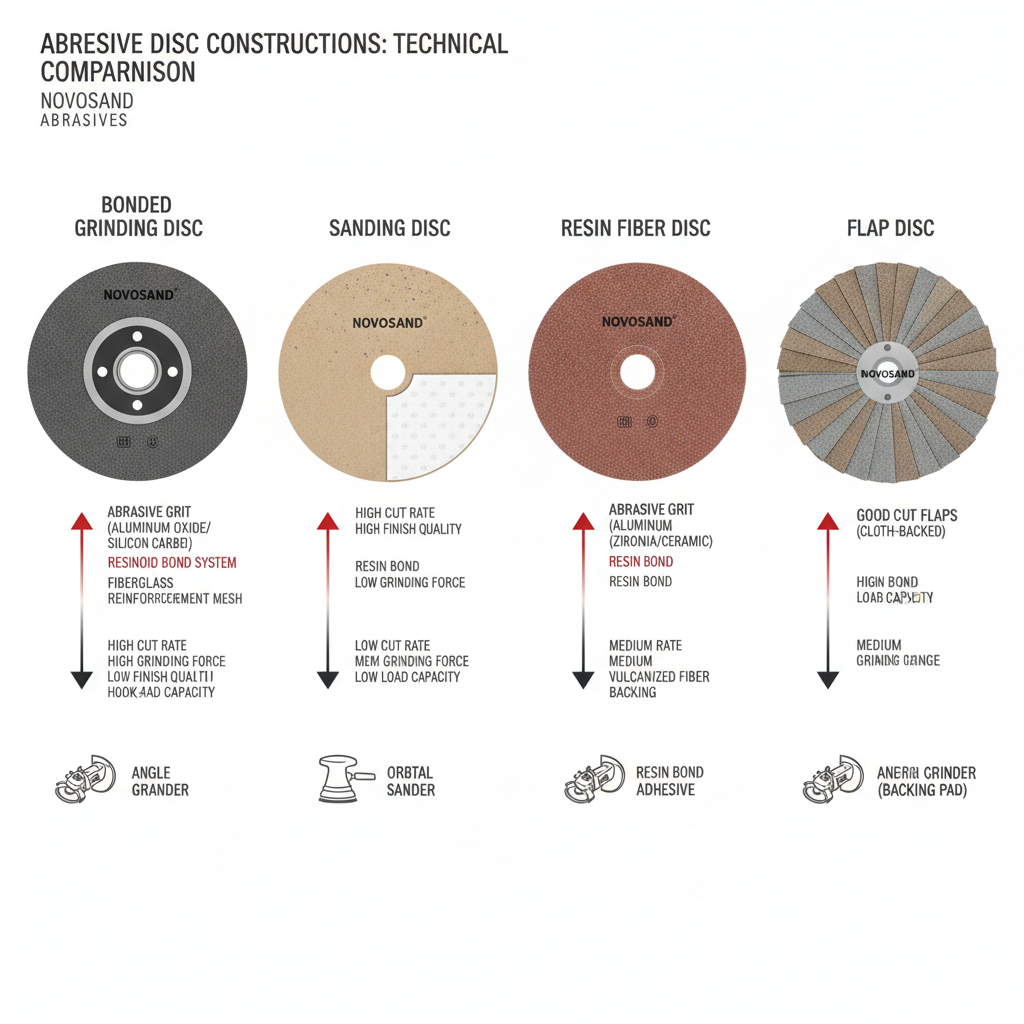
Disc performance changes dramatically with construction because thickness, bond system, and backing stiffness control how the abrasive meets the workpiece. A 6 mm bonded grinding wheel can take heavy side pressure on an angle grinder, while a thin 125 mm film or paper sanding disc would fail quickly in that same weld-removal job.
In metal fabrication, I’ve seen buyers mix these categories and then blame the grit. The real issue was construction. One customer processing carbon-steel welds used P36 hook-and-loop sanding discs on an angle grinder and burned through them in minutes. After switching to depressed-center grinding wheels for removal and then a P60 zirconia6 flap disc for blending, disc consumption dropped by around 30%, and rework also fell.
Resin fiber discs sit in the middle. They use a vulcanized fiber backing plus a resin-over-resin bond, so they cut harder than paper-backed finishing discs and still give better surface control than a solid grinding wheel. In a furniture hardware plant, I suggested a 4-1/2 inch P80 ceramic resin fiber disc for deburring stamped brackets before powder coating. The operators got a cleaner edge and about 20-25% longer usable life than their previous general-purpose sanding discs.
For finish work, thinner constructions matter more. PSA, hook-and-loop, film, mesh, and cloth discs follow the pad closely, so they produce a more even scratch pattern and lower Ra value—that means smoother surface roughness. To be honest, this is where the spec sheet gap often appears. I always suggest classifying disc SKUs by removal load first, then by finish target, and testing one production batch before scaling the order.
A 6 mm depressed-center grinding disc can tolerate radial and side-loading that would quickly tear a 125 mm paper or film sanding disc, because the grinding disc's reinforced resin bond and rigid structure are designed for edge pressure rather than conformable surface finishingTrue
Construction determines how force is transmitted into the abrasive. Grinding discs use a thick, fiber-reinforced bonded structure that supports high pressure and limited side grinding on an angle grinder. Sanding discs rely on flexible paper, film, or cloth backings intended to keep more abrasive points in contact during controlled finishing, not to survive weld removal loads concentrated at the disc edge.
If two discs use the same grit size, a thinner sanding disc will usually remove carbon-steel welds faster than a bonded grinding disc because less backing thickness lets more abrasive grains contact the metalFalse
Equal grit size does not mean equal cutting behavior across disc types. Bonded grinding discs are built to withstand much higher unit pressure and maintain aggressive stock removal under weld-grinding loads. Thin sanding discs may present a broad contact area, but their backing and bond system cannot support the same pressure or edge loading, so they typically wear, glaze, or fail long before matching a grinding disc in weld removal.
How Do Grit Ranges Compare by Task?
Grinding discs use coarse grades such as A24, A30, and A36 for rapid stock removal, weld knockdown, and bevel preparation, not fine finishing. Sanding discs span a wider range, from P40-P80 for stripping and shaping, P100-P240 for smoothing and blending, and P320+ for finishing, paint preparation, and scratch refinement7. Incorrect grit selection increases rework, slows output, and can cause overheating or excessive scratch depth.
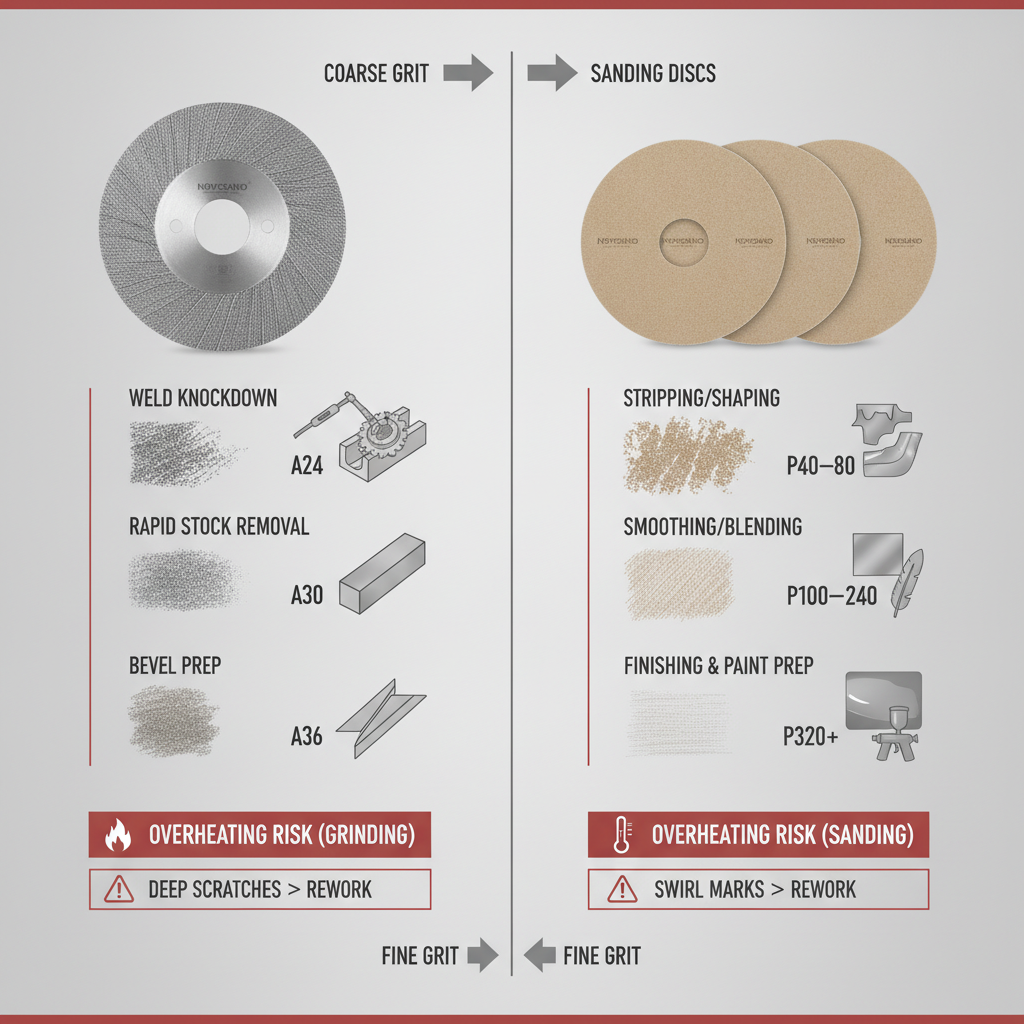
Grit choice decides whether the disc removes metal fast or leaves a controlled scratch pattern. That is why grinding discs stay in coarse grades like A24, A30, and A36, while sanding discs cover rough shaping all the way to fine finishing.
| Disc Type | Typical Grit Range | Best For | Surface Result | Common Backing/Bond |
|---|---|---|---|---|
| Grinding disc | A24–A36 | Weld knockdown, bevel prep, heavy stock removal | Rough, deep scratch | Bonded wheel |
| Sanding disc, coarse | P40–P80 | Rust stripping, filler shaping, leveling | Aggressive but more controllable | Fiber, cloth, paper |
| Sanding disc, medium | P100–P240 | Smoothing, blending, prep before coating | Moderate scratch | Paper, film, cloth |
| Sanding disc, fine | P320+ | Paint prep, finish sanding, scratch refinement | Fine, coating-ready | Film, paper, mesh |
From my experience, the mistake is usually skipping steps.
A metal fabricator in Southeast Asia used a 125 mm A24 grinding disc for weld removal, then tried to paint directly after one pass with P120.
The weld came down fast, but the scratch stayed too deep.
They added an extra P60 and P180 step with a vulcanized fiber disc, and rework dropped by around 20%.
In woodworking, I do not recommend bonded grinding discs for normal panel sanding.
They cut too hard, build heat quickly, and can gouge oak or rubberwood in seconds.
A24-A36 grinding discs are intentionally kept in a much coarser grit window than most sanding discs because bonded wheels are designed to fracture and expose new cutting points during heavy stock removal, producing a deeper scratch pattern suitable for weld knockdown rather than finish prepTrue
Grinding discs use a bonded wheel structure, not a coated abrasive backing, so they are optimized for aggressive metal removal under high pressure. Coarse grades like A24, A30, and A36 cut fast and tolerate severe applications such as bevel prep and weld removal, but they leave a rough surface that typically requires follow-up sanding if appearance or paint readiness matters. Sanding discs span a wider grit range because they are used for both shaping and controlled finishing.
A36 grinding discs usually leave a finer, more paint-ready surface than 80-grit sanding discs because the bonded wheel bond polishes the metal as it cutsFalse
An A36 grinding disc is still a coarse grinding product and normally leaves a much rougher, deeper scratch than an 80-grit sanding disc. Bonded grinding wheels are built for stock removal, not polishing. Even when the grade number looks numerically closer to sanding grit, the construction and cutting action are different, so you cannot assume a grinding disc will produce a finer finish than a medium-grit coated abrasive sanding disc.
How Should Disc Choice Vary?
Disc selection should vary by substrate, operation, and industry. Metal fabrication often uses bonded grinding wheels, coarse flap discs, or resin fiber discs for weld removal and edge shaping, while sanding discs handle blending and refinement. Wood applications rely on sanding discs for controlled scratch patterns, and masonry may require silicon carbide, diamond tools, or specialized grinding products instead of standard metal wheels.
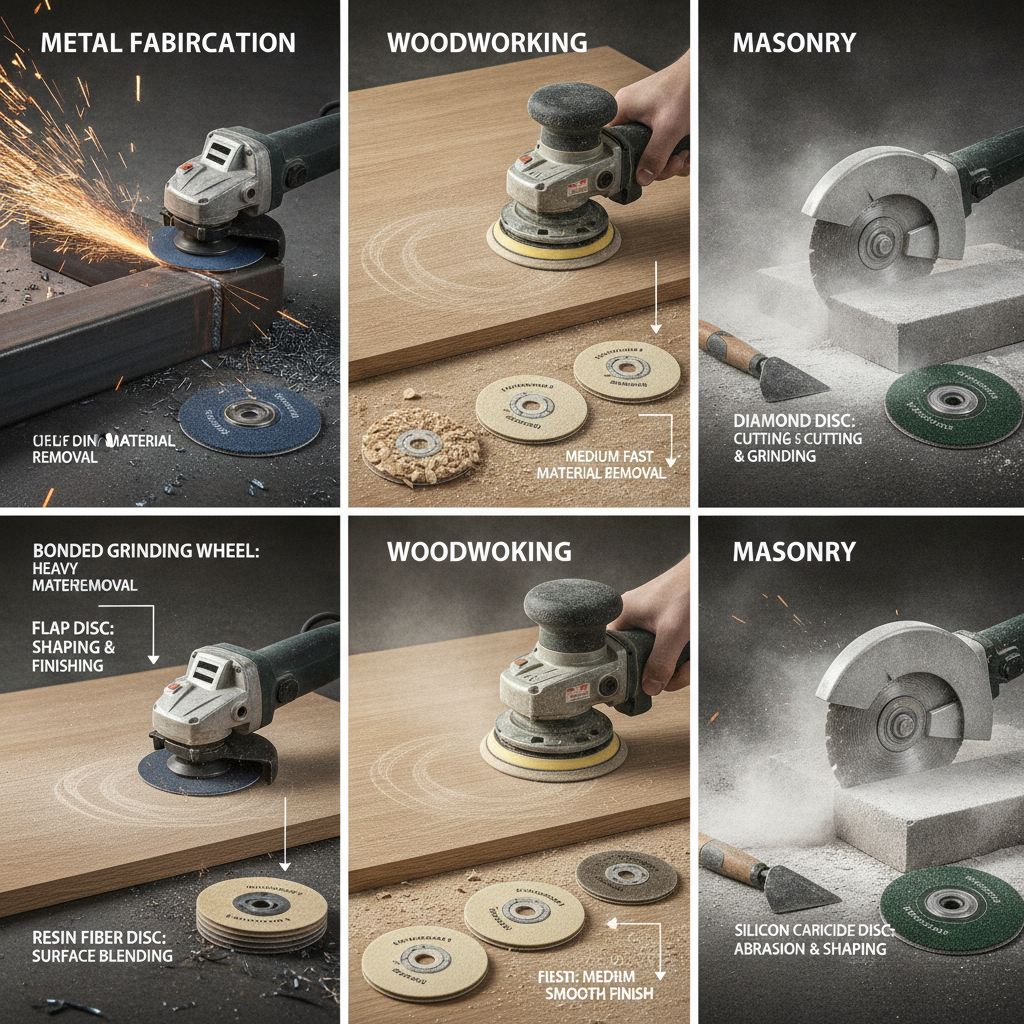
A disc that works well on steel can fail badly on oak, aluminum, or concrete. The right choice follows the process step: stock removal, blending, scratch refinement, then final finish.
In metal fabrication, weld removal usually starts with a bonded grinding wheel, a coarse flap disc, or a resin fiber disc. A common setup is 125 × 6 × 22.23 mm for heavy steel grinding, then a P60 or P80 flap disc for blending. I’ve seen fabrication shops switch too early to sanding discs and double their disc consumption in one shift.
Automotive refinishing is different. Body filler shaping often starts around P80, then moves to P120, P180, and P320 for feathering and primer sanding. From my experience, film-backed hook & loop discs8 last around 25-30% longer than basic paper discs in dusty filler work, because they resist edge wear better.
Wood shops care more about scratch control than raw aggression. In a furniture plant in Guangdong, a customer used P120 aluminum oxide paper discs on oak doors, then finished with P180 and P240 stearated discs to reduce loading. Grinding wheels were never the answer there—they left burn marks, deep scratches, and too much rework.
Masonry changes the rule again. Standard metal wheels are not the default for stone or concrete; silicon carbide discs, diamond cups, or other masonry tools usually make more sense. I always suggest mapping each production step first, then matching grain type, backing, attachment system, and safety rating to that step. Test that sequence on real parts before placing a large order.
On heavy steel welds, starting with a 125 × 6 × 22.23 mm grinding wheel or a coarse resin fiber/flap disc and then moving to P60-P80 for blending is usually more economical than beginning with sanding discs, because sanding discs glaze faster under high unit pressure and can double disc consumption.True
Grinding wheels, resin fiber discs, and coarse flap discs are built for aggressive stock removal and weld knockdown, especially on steel where heat and pressure are high. Sanding discs are better suited to later-stage blending and scratch refinement. If they are used too early on proud welds, the abrasive dulls or loads prematurely, reducing cut rate and increasing disc usage and labor time.
A sanding disc that performs well on carbon steel will generally cut oak, aluminum, and concrete equally well if the grit size stays the same, because disc choice is determined mainly by grit rather than workpiece material.False
Material type strongly affects abrasive performance. Oak can burn and clog certain coatings, aluminum loads discs rapidly without anti-loading design, and concrete requires abrasives and bond systems that tolerate mineral hardness and dust. Grit matters, but grain type, coating, backing, bond, and whether the step is stock removal or finish refinement are just as important.
How Do Flap and Fiber Discs Differ?
Flap discs bridge grinding and sanding by combining efficient material removal with smoother finishes, lower vibration, and better contour conformity than bonded grinding wheels. Resin fiber discs are heavier-duty coated abrasives used with a backing pad for deburring, weld blending, scale removal, and surface preparation. In metalworking, grinding wheels, flap discs, and fiber discs are often sequenced by stock removal, blending, and controlled intermediate finishing needs.
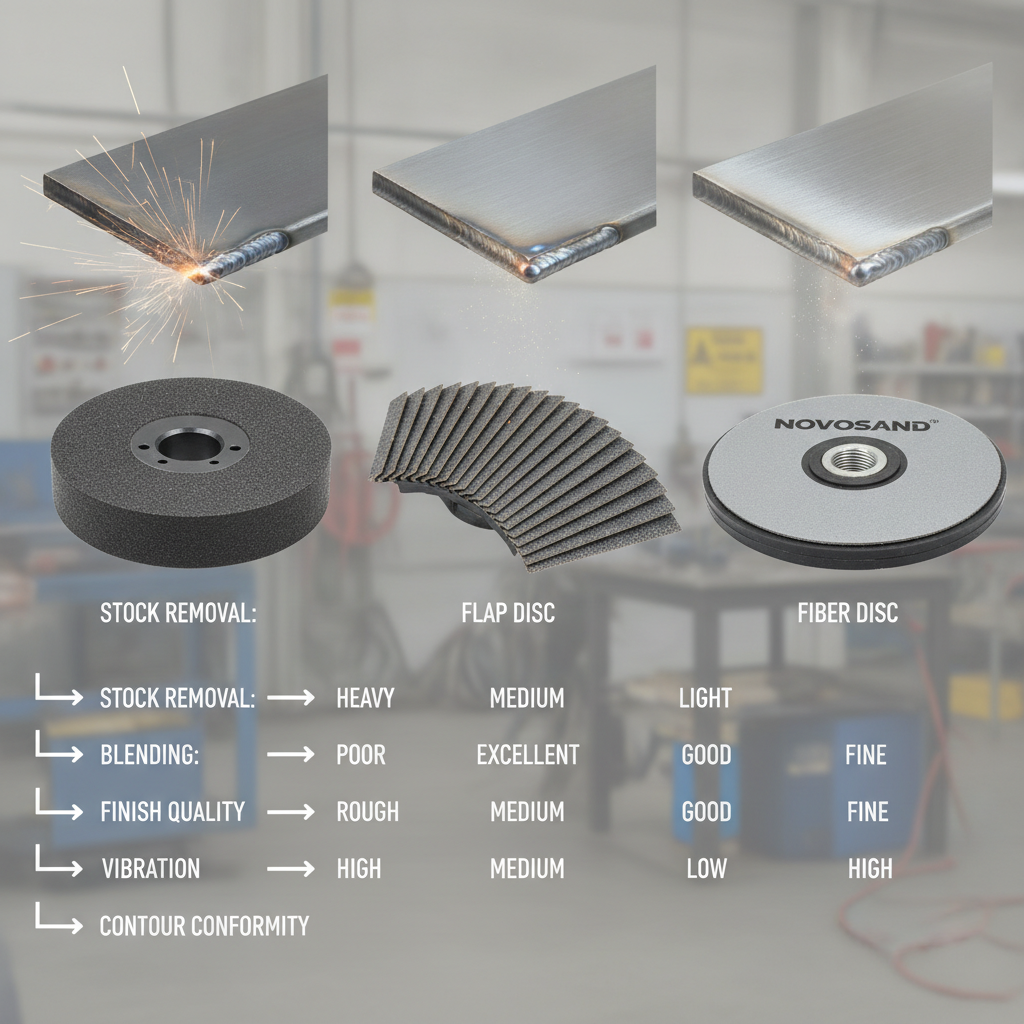
The real difference shows up at the contact point with metal. Flap discs cut with overlapping abrasive cloth flaps, while fiber discs use a flat resin fiber backing and need a separate backing pad.
That construction changes how they behave in production. A 4-1/2 inch flap disc in P40 ceramic or zirconia can remove weld material fast, then keep blending as the flaps wear and expose fresh grain. The finish is usually smoother than a bonded grinding wheel, and vibration is lower. In my experience, that matters a lot on stainless handrail work and thin-gauge parts where operators need control.
Fiber discs are more aggressive in flat, pressure-heavy work. I recently discussed this with a metal fabricator serving agricultural equipment builders. They used 5 inch resin fiber discs, mostly P24 to P60, on medium-hard backing pads for scale removal and deburring carbon steel brackets. Their operators ran at roughly 15-20 degrees, and disc life improved around 20% after they matched pad hardness to grit and pressure. Small change, real result.
Flap discs fit better when the part has edges, curves, or a weld that needs blending without digging in. Fiber discs fit better when the shop wants a flatter contact patch and a more controlled scratch pattern before the next finishing step. That is the spec sheet gap I see often—buyers compare only price per disc, not cut rate, finish, and rework time.
I always suggest viewing them as process tools, not substitutes in every case. Test both on the same grinder, angle, and material before standardizing.
A 4-1/2 inch flap disc in P40 ceramic or zirconia can often handle both weld removal and subsequent blending in one step because the overlapping cloth flaps wear back progressively and keep exposing fresh abrasive, unlike a fiber disc that stays flat and typically needs a backing pad matched to the pressure level.True
This is true because flap discs are built from multiple layered abrasive flaps, so as the outer edges wear, new grain is revealed and the disc continues cutting while producing a blended surface. Fiber discs use a single flat abrasive layer on vulcanized fiber, so their grinding behavior depends heavily on the separate backing pad's hardness and angle of attack. In production, that makes flap discs more forgiving for combined stock removal and finishing, while fiber discs are often chosen when maximum aggression and pad-controlled pressure are needed.
Fiber discs generally run with less vibration than flap discs because their flat resin fiber backing cushions the grinder and eliminates the need for operator angle control during weld grinding.False
This is false because fiber discs do not provide built-in cushioning; they are relatively rigid and require a separate backing pad to support the disc. Flap discs usually feel smoother in use because the layered cloth flaps conform slightly to the workpiece, helping reduce chatter and leaving a more blended finish than a hard grinding wheel or a rigid fiber disc setup. Fiber discs also still depend on proper grinding angle and pad selection to control cut and finish.
Which Disc Delivers Lower Total Cost?
Lower total cost depends on matching the abrasive to the task rather than comparing unit price alone. Grinding wheels, flap discs, resin fiber discs, and sanding discs differ in removal rate, usable life, changeover frequency, surface roughness, and rework risk9. Accurate comparison requires testing material removal, disc life, labor time, downstream finishing time, and finish quality under identical production conditions.
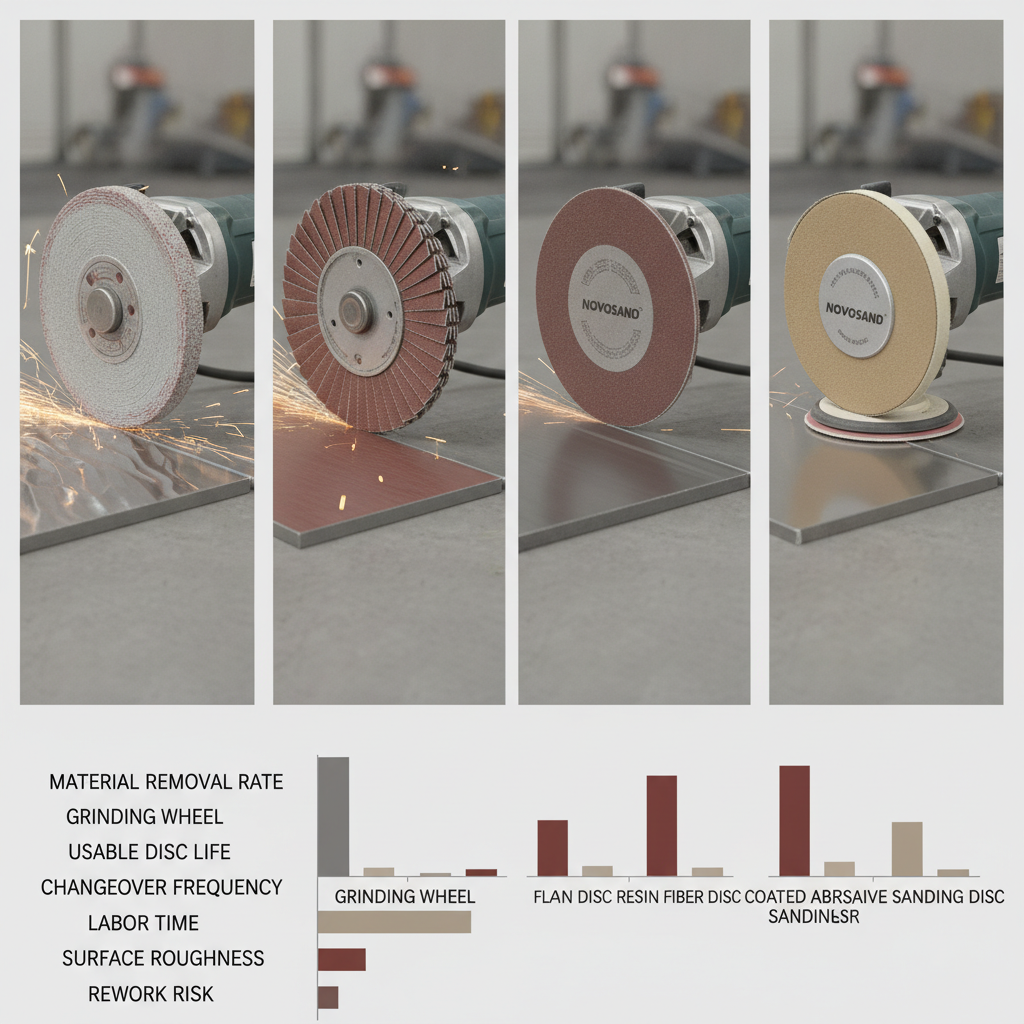
Cost per finished part usually changes more from cut rate and rework than from disc price.
A cheap disc that lasts 8 minutes but adds one extra sanding step can easily cost more than a premium disc that finishes the job in one pass.
| Disc Type | Best For | Typical Grit Range | Backing/Bond | Cost Drivers |
|---|---|---|---|---|
| Grinding wheel | Heavy stock removal | 24–60 | Vitrified / resin wheel | High cut, rough finish, more follow-up |
| Flap disc | Weld blending, edge work | 40–120 | Overlapped cloth flaps | Longer life, fewer changes |
| Resin fiber disc | Aggressive metal grinding | 24–80 | Vulcanized fiber, resin bond | Fast cut, needs backup pad |
| Sanding disc | Wood finish, paint prep | 80–2000+ | Paper, film, mesh | Better finish, lower rework |
In one metal fabrication trial, a customer compared a 125 mm P40 ceramic resin fiber disc with a finishing-style P80 paper-backed sanding disc on mild steel welds.
The resin fiber disc removed material about three times faster and lasted around 25 minutes per disc.
The sanding disc glazed, overheated, and tore in under 8 minutes.
Labor dropped because operators changed discs less often and spent less time fighting tool failure.
I’ve seen the opposite in furniture plants.
A cabinet factory in Guangdong once tried coarse flap discs for sealer sanding because the unit price looked attractive per piece.
Bad idea.
In metal fabrication, a flap disc priced 30-50% higher than a grinding wheel can still deliver lower total cost per finished part because it can remove stock and leave a blendable finish in one operation, eliminating a secondary sanding step that often adds more labor cost than the abrasive itself.True
Total cost is driven more by time on the grinder, number of process steps, and rework than by unit disc price. Grinding wheels are optimized for aggressive stock removal, commonly in coarse 24-60 grades, but they usually leave a rougher surface that requires follow-up finishing. Flap discs combine coated abrasive flaps with a backing plate, so they can both cut and refine the surface, often reducing handling time, disc changes, and labor per part.
A lower-priced grinding disc almost always has the lowest total cost per part because vitrified or resin-bond wheels outlast flap discs by at least 5:1 and produce a finish fine enough to skip any later sanding.False
This is incorrect because longer wheel life does not automatically mean lower process cost. Grinding discs may last well in heavy stock removal, but they typically leave a rougher scratch pattern and heat-affected surface that often requires additional finishing. In many applications, one extra blending or sanding step outweighs any savings from a cheaper wheel. Service life ratios also vary widely by material, pressure, grinder power, and operator technique, so a blanket 5:1 claim is not technically reliable.
What safety standards govern disc choice?
Disc choice depends on product type, speed rating, mounting method, and applicable safety standards. Bonded grinding wheels in Europe are typically covered by EN 1241310, while coated abrasive flap discs and fiber discs are commonly covered by EN 1374311. Safe use also requires correct guards, flanges, backup pads, PPE, and verification that maximum operating speed exceeds tool RPM.
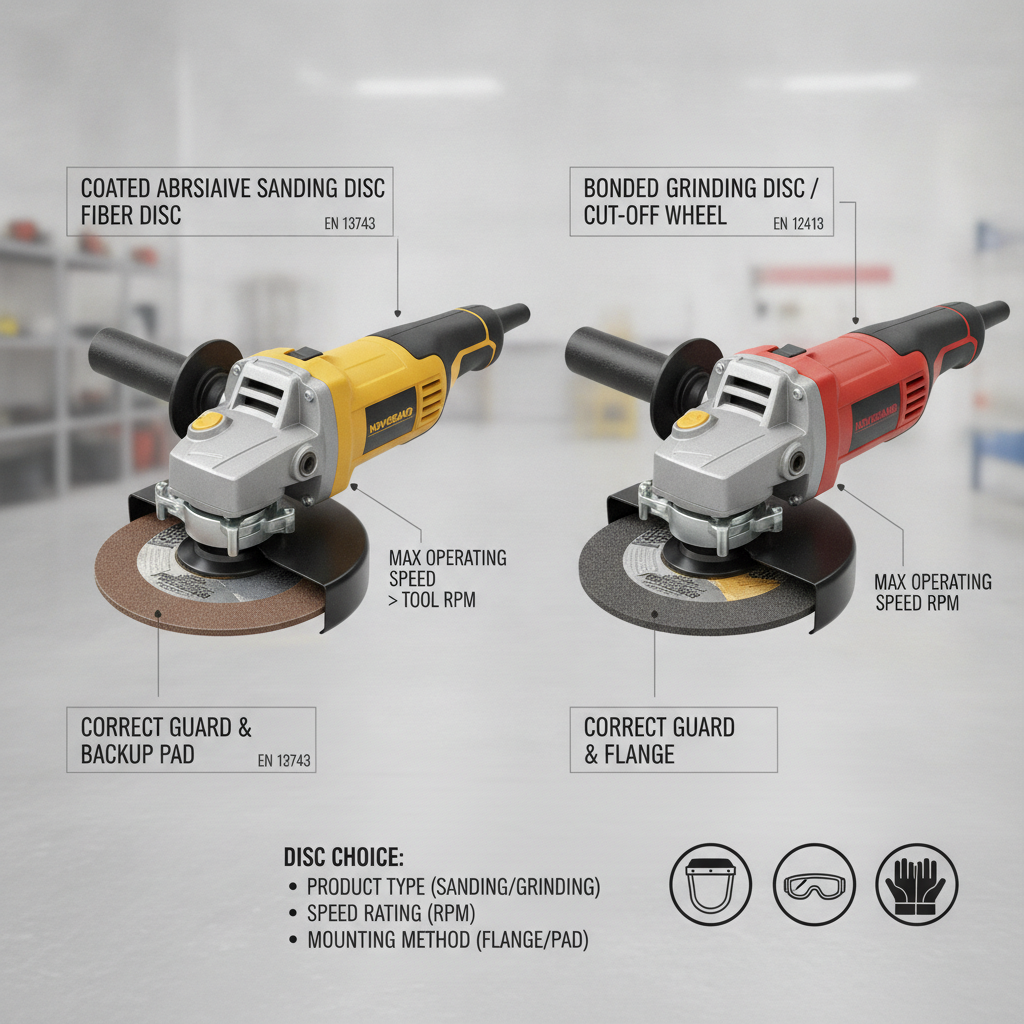
Maximum operating speed is the first filter, because a disc that spins beyond its rated limit can fail before it even touches the workpiece. After that, the standard matters: bonded grinding wheels in Europe usually follow EN 12413, while flap discs and resin fiber discs commonly fall under EN 13743.
I’ve seen buyers mix these categories, especially when they switch from heavy stock removal to blending. In one metal fabrication shop, the team used 125 mm resin fiber discs on angle grinders running around 12,000 RPM, but half the operators mounted them on worn backup pads. The discs did not explode, but edge tearing, vibration, and finish inconsistency showed up within one shift. That is a safety issue, not only a quality issue.
Bonded wheels carry more stored energy, so mounting hardware matters more. Correct flanges, proper guard position, and checking for cracks or age-related deterioration are basic steps. For coated abrasives, the risk often comes from the wrong support system—hook-and-loop discs on damaged pads, PSA discs on contaminated plates, or fiber discs on pads that are too hard or too soft for the job.
From my experience, this is where the spec sheet gap appears. Buyers compare grit, price, and grain type, but they forget the approved disc-tool combination. A P36 ceramic flap disc rated above the grinder speed is safer than a cheaper disc with unclear markings, even if both seem to cut similarly on day one.
I always suggest standardizing disc diameter, pad type, flange setup, and RPM checks across the line. That simple control reduces incidents, protects operators, and usually cuts unplanned downtime as well.
A 125 mm disc marked for 12,250 rpm is limited by peripheral speed rather than diameter alone; on a 10,000 rpm angle grinder it may be acceptable, but the same abrasive family in a smaller diameter can carry a higher rpm rating while still complying with the same safety standard.True
Disc speed limits are tied to the maximum safe peripheral speed the construction can withstand, not just the disc's diameter. Because edge speed rises with both diameter and rpm, smaller discs can often be rated for higher rpm without exceeding the same stress limits. This is why checking the printed maximum operating speed on the disc is the first safety step before considering whether the product falls under EN 12413 or EN 13743.
Under European safety rules, flap discs, resin fiber discs, and bonded grinding wheels are all governed by EN 12413, so the standard marking does not help distinguish a sanding disc from a grinding disc.False
This is incorrect because the standards are category-specific. Bonded grinding wheels are typically covered by EN 12413, while flap discs and resin fiber discs commonly fall under EN 13743. The marking therefore does provide a useful clue about the product type and intended construction, which matters when buyers switch between heavy stock removal and blending applications.
How Does Technique Affect Disc Life?
Operating technique directly affects disc life, cut rate, surface finish, and safety. Sanding discs typically perform best with lighter pressure and flatter contact, while grinding discs need controlled pressure and the correct working angle. Excessive force can cause heat buildup, loading, backing damage, or bond stress. Training on pressure, angle, tool movement, and overheating signs helps reduce disc consumption and improve process consistency.
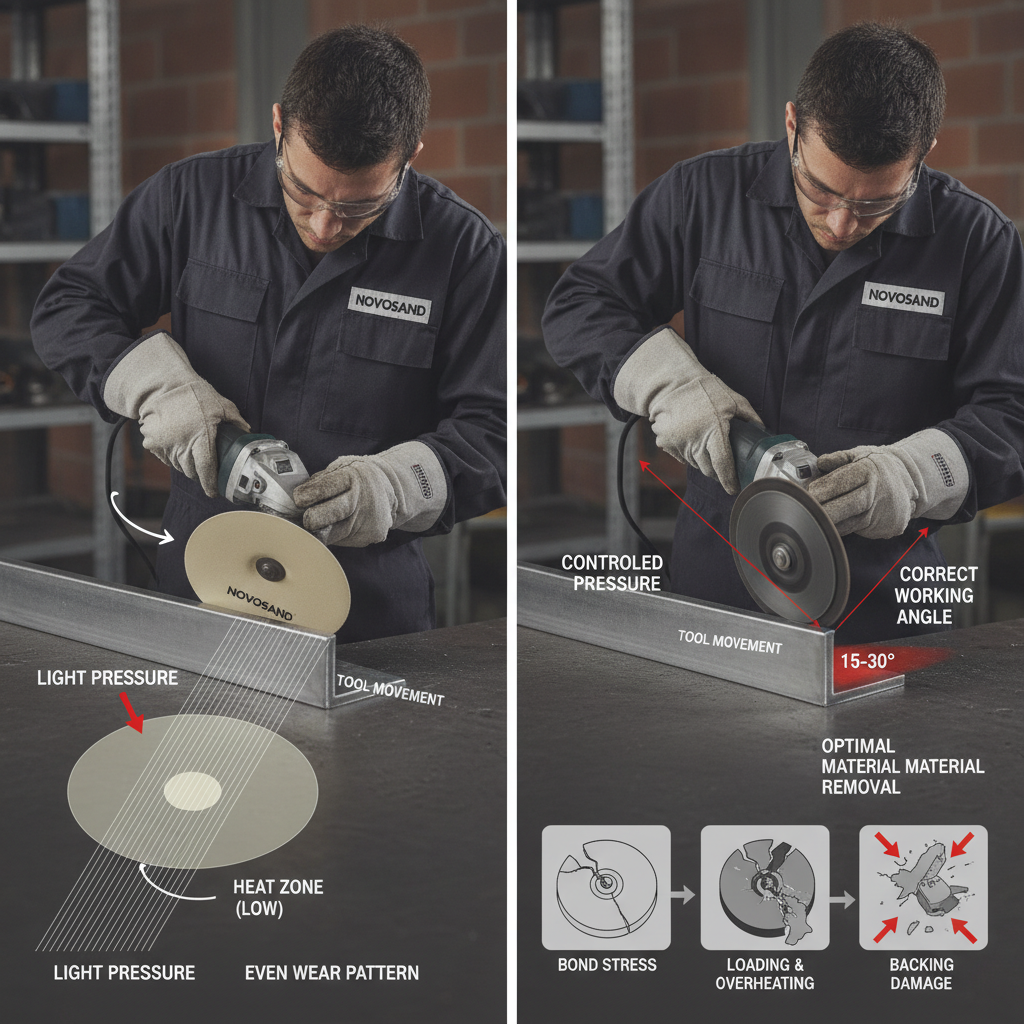
Pressure and angle often decide disc life before grit selection does. A sanding disc run too hard or too edge-heavy will cut hot, load faster, and lose finish consistency long before the abrasive grain is fully used.
For random orbital sanding, flatter contact usually works better, especially with P120 to P320 film-backed or paper-backed discs. In a furniture shop, I saw operators pushing 150 mm hook-and-loop discs hard on solid oak panels to speed up stock removal. Disc life dropped to around 25-35 panels per disc, and the surface showed swirl marks near the edges. After they reduced hand pressure, improved dust extraction, and kept the pad flatter, life increased to roughly 40-50 panels with more even scratch patterns.
Grinding is different. A resin fiber disc or Type 27 grinding wheel needs steady pressure and the right working angle, often around 20-30 degrees depending on the product and job. Too flat, and the disc may glaze instead of cutting. Too steep, and heat concentrates at the edge, which can stress the bond system and wear the disc unevenly. I’ve seen this on metal fabrication lines where weld cleanup looked slow, so operators leaned harder on 125 mm ceramic grain discs. They got more sparks, not more productivity.
Technique also affects attachment and backing life. Excess pressure can soften PSA adhesive, weaken hook-and-loop grip, or crack a vulcanized fiber backing at the outer edge. To be honest, this is a training issue as much as a product issue. I always suggest a short operator trial on pressure, angle, and overheating signs before changing disc specifications or buying in bulk.
On a 150 mm random orbital sander using P120-P320 paper- or film-backed sanding discs, keeping the pad nearly flat typically extends disc life more than increasing feed pressure, because edge-heavy sanding concentrates heat and wear into a small arc of abrasive rather than using the full disc faceTrue
Random orbital sanding works best when most of the disc face shares the load. When operators tilt the tool or bear down on one edge, only a narrow band of grain is cutting, so local temperature rises, resin and wood dust load faster, and that section dulls before the rest of the disc is used. A flatter presentation spreads friction and chip evacuation across the full abrasive surface, improving both finish consistency and usable disc life.
Applying higher pressure with a sanding disc always improves disc life because the extra force keeps abrasive grains exposed and prevents loading, especially on oak and other dense hardwoodsFalse
Higher pressure usually shortens sanding disc life, particularly on dense woods that generate heat quickly. Excess force increases friction, softens finishes or wood resins, and packs debris between grains, which accelerates loading rather than preventing it. It can also deform the backup pad and make the disc cut on its edge, causing uneven wear and reducing finish quality.
We’ve covered the main differences between sanding discs and grinding discs, especially how function, construction, and operating load affect the right choice. We also looked at borderline options like resin fiber discs and flap discs, where small spec mismatches can cause big performance issues.
From my experience, the biggest mistake is buying by name instead of application. That’s the spec sheet gap—buyers see “disc” and assume interchangeability, but backing strength, abrasive grain, and tool speed matter much more in real production.
If you’re comparing options for wood, metal, or refinishing work, feel free to reach out. I’m happy to help you sort through the practical differences and choose what fits your process.
References
-
Explains abrasive structure, strength, heat resistance, and best-use cases, helping buyers select the right disc based on removal rate and safety requirements. ↩
-
Explains how Type 27 disc design improves angle grinder clearance, load distribution, and safe grinding performance in metal fabrication applications. ↩
-
Provides an in-depth explanation of abrasive loading (clogging), heat generation mechanisms, and anti-loading strategies, including metal dust and soft coating scenarios, to extend disc life and stabilize surface quality. ↩
-
Explains the structure, load-bearing capacity, and high material removal applications of bonded abrasive wheels, helping users distinguish grinding wheels from sanding discs and avoid misuse. ↩
-
Details failure modes of PSA paper-backed discs under high lateral load, including adhesive softening, edge tearing, and pad misalignment, useful for process selection and engineering reference. ↩
-
Systematically explains the cutting characteristics, wear resistance, and suitable metals for zirconia alumina abrasives, helping evaluate their performance in weld removal and heavy-duty grinding. ↩
-
Explains how different abrasive grit sizes affect scratch depth, pre-coating surface quality, and downstream process efficiency, useful for optimizing sanding workflows. ↩
-
Provides an in-depth analysis of film-backed hook-and-loop discs in putty sanding, highlighting edge wear resistance, dust extraction efficiency, and service life advantages, along with practical grit selection guidance. ↩
-
Systematically explains how rework risk affects total cost per part, including surface roughness, additional sanding time, and yield rate impact, supporting better abrasive selection decisions. ↩
-
Describes European grinding wheel safety standards, including scope, testing requirements, and marking rules, helping procurement and operators ensure compliance and avoid overspeed failures. ↩
-
Explains safety standards, speed limits, and installation requirements for flap discs and fiber discs, helping verify product compliance and prevent hazards caused by incorrect assembly. ↩